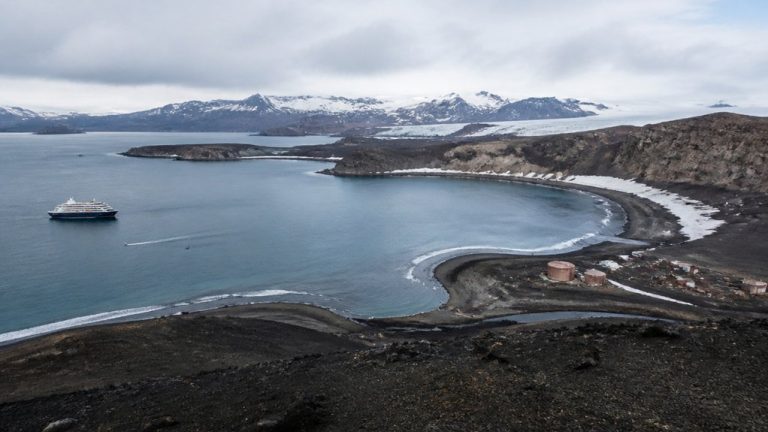
Antarctic Peninsula Cruise Port Guide
Learn what expedition leaders won’t tell you about zodiac landings, penguin encounters, and the secrets to maximizing your Antarctic adventure.
In this guide
- Cruise Port Overview: What To Expect
- Getting From the Port To Town
- The Must-Do Experience: Start Here
- History Culture and the Top Sights
- Beyond the Centre: Day Trips and Alternatives
- Shore Excursion or Going It Alone
- Before You Leave the Ship: Antarctic Peninsula Practicalities
- Your Port Day: A Sample Itinerary
Try one free personalised day plan — built around your ship’s actual arrival and departure times. Then get every port on your cruise done the same way from £7.99 (about $10).
Cruise Port Overview: What To Expect
Antarctica has no traditional cruise port because your ship functions as the port itself, and the expedition leaders will decide each morning where you can actually go based on weather conditions. You won’t walk onto a proper dock with shops and restaurants; instead you’ll be climbing into zodiacs in rough seas, heading toward penguin colonies, icebergs, and research stations that may be inaccessible depending on ice. This demands a completely different approach than cruising the Caribbean or Mediterranean.
Your itinerary is provisional at best. The captain and expedition team reassess conditions daily—wind, visibility, and sea state determine what’s possible, which means you need to be genuinely flexible. Bring seasickness medication regardless of whether you’ve had problems before; the Drake Passage is genuinely rough.
Expedition ships that make landings carry no more than 500 passengers, and only 100 people from a ship can be ashore at one time, so landings run in groups and everyone funnels through the same sites each day. Competition for zodiac spots is real when your entire ship is loading simultaneously in early morning conditions. The strategy that works is attending briefings, moving fast when loading begins, and accepting that solitude doesn’t exist here.
Your cabin will be noticeably small because expedition vessels prioritise stability and manoeuvrability rather than passenger space. Pack layers relentlessly—the thermometer reading means little when wind-chill is factored in. You’re paying for what’s outside your window, not the room itself.
Getting From the Port To Town
An Antarctic Peninsula cruise means staying aboard your ship for the entire journey. You won’t step onto land to reach a town or settlement because the Peninsula has neither. Instead, zodiacs transport you from your vessel to ice shelves, penguin colonies, and research stations and sites such as Petermann Island or Deception Island. What awaits you ashore is raw landscape, not infrastructure—no streets, restaurants, or shops exist where you’re landing.
This changes how you structure your time completely. Rather than arranging transport into a town centre, your actual choice involves deciding which optional activities to book beyond your included itinerary. Many cruise operators offer add-on experiences such as kayaking between icebergs, overnight camping on the continent, or zodiac-based wildlife photography sessions, and these sell out quickly among other passengers. You need to book these in advance online because your time ashore stretches only across several hours, and popular activities disappear fast.
Your ship functions as your base, your transport link, and your accommodation simultaneously. The expedition team manages all movement by rotating zodiac trips so everyone reaches their assigned landing without damaging sensitive sites. You’re entirely reliant on the ship’s schedule and weather decisions, which actually works to your advantage—no hunting for taxis, no navigating strange streets, no falling for tourist traps. Everything comes to you, which creates convenience alongside reduced choice. The trade-off becomes clear when you’re standing among Adélie penguins rather than browsing a souvenir shop.
The Must-Do Experience: Start Here
The landing itself is the practical justification for going—comparatively few people ever set foot on Antarctica, which means you’re joining a genuinely small group. Your first zodiac crossing from ship to shore feels genuinely exposed, and when you reach ice or volcanic rock, the sheer scale of the place becomes impossible to ignore. Everything that follows—penguins, the silence, the light—depends on this first moment actually happening.
Get onto the first zodiac trip to penguin colonies during your first full day ashore. Depending on your route you’ll see Adélie, Chinstrap, or Gentoo penguins, and these landings attract every passenger with a camera, so timing matters. The birds treat humans as irrelevant, which means you’re watching actual behaviour rather than animals reacting to your presence.
If Deception Island or Petermann Island appear on your itinerary, attend them. Deception Island has a geothermal beach where volcanic heat beneath the ice warms the water enough to swim in—almost nowhere else offers this. These slots fill because other passengers book ahead, so confirm your place with the expedition team as soon as the ship departs.
The optional activities—kayaking between icebergs, overnight camping on the continent, guided underwater photography—actually change what your trip becomes. Book these through your expedition operator when you book the cruise, as places are limited and fill early in the season.
History Culture and the Top Sights
Antarctica has almost no recorded history because no indigenous people settled here and no civilisations built monuments. What you’re actually doing is observing geology and wildlife on a continent that humans have barely altered, which is the entire point of going.
The historical sites that exist are research stations and abandoned whaling stations, and they matter precisely because they’re unpretentious. Port Lockroy, a former British Antarctic Survey base on Goudier Island, is now a museum and post office run by the UK Antarctic Heritage Trust—you’ll see where scientists actually lived and worked rather than a staged recreation. Petermann Island is also worth the landing if ice and weather permit your ship to reach it.
Your expedition team’s briefings will teach you far more than any plaque. Naturalists and historians aboard will explain the geological processes that shaped these landscapes, which penguin species survive here and why, and how climate systems are changing. Attend these talks even when you’re tired after a zodiac landing, because they provide the framework for understanding what you’re seeing.
Prepare yourself before boarding by taking a pre-cruise lecture series through organisations that specialise in Antarctic natural history. These sessions give you the context needed to follow what your expedition team points out and why the terrain looks as it does. You’ll move through your landings with genuine comprehension rather than just passing through.
Beyond the Centre: Day Trips and Alternatives
Most people assume Antarctic cruises are all-inclusive, but that assumption misses an important distinction. The Peninsula’s landing sites aren’t places you can explore independently—your access is controlled by zodiac availability, weather, expedition staff decisions, and what the ship’s operations allow on any given day. This constraint shapes everything about how you experience the region.
You’re not really choosing between ship excursions and solo exploration in the conventional sense. Instead, you’re deciding whether to pay extra for specialised activities beyond the included landings, or whether those included landings satisfy what you came for. Most passengers find the standard landings adequate because they spend mornings and afternoons on zodiacs visiting penguin colonies, abandoned whaling stations, and research bases. The days fill up quickly with actual activity rather than downtime.
If you want to consider optional add-ons, focus on experiences that genuinely offer something different from what you’ll get standing on ice with binoculars. Kayaking from select sites or underwater photography workshops led by the ship’s naturalists fall into this category, though they cost more than your base fare and require advance booking because they fill rapidly and depend on weather coordination with the ship’s operations team.
The real alternative to standard cruise options is booking a smaller expedition vessel instead of a large ship. These carry fewer passengers, which translates directly to more frequent landings, longer time actually ashore, and smaller zodiac groups that move more efficiently. The cost increases substantially, but the practical difference in how you spend your days is significant enough that some travellers consider it worthwhile.
Shore Excursion or Going It Alone
The expedition team aboard your ship decides when you can leave the vessel, and their caution about weather and ice conditions will likely exceed whatever you’ve planned from home. You cannot simply stay longer at a penguin colony because conditions shift constantly and the zodiac departures follow fixed schedules based on tides and safety requirements.
The actual decision you face isn’t ship excursions versus independent exploration—it’s accepting the standard landings included in your fare or paying extra for optional activities that frequently don’t deliver value. Most passengers already spend considerable time daily on zodiacs, which provides genuine exposure to the landscape. The additional kayaking or photography workshops appear attractive in promotional materials, but they’re entirely dependent on weather windows that often fail to materialise, leaving you with a payment and nothing tangible in return.
Book an independent expedition operator before your cruise if you want genuine control over your Antarctic time rather than purchasing add-ons through the ship. Smaller operators running their own vessels provide multi-day itineraries with substantially greater flexibility, more landing opportunities, and smaller group sizes that fundamentally change how you navigate the landscape. These expeditions cost significantly more than a standard cruise, but you’re paying for actual control over your shore time, not uncertain promises about optional extras that depend on conditions nobody can predict.
Before You Leave the Ship: Antarctic Peninsula Practicalities
The expedition team will brief you on landing sites only the night before, which means you cannot adequately research what’s actually worth your time until you’re already aboard and committed. This deliberate vagueness protects the company’s flexibility but leaves you fundamentally blind when planning your day ashore. Your only real advantage is that the zodiac drivers and naturalists know far more about conditions and wildlife patterns than any pre-cruise research will teach you, so listen carefully during their morning briefings and ask direct questions about what you’ll actually see.
They’ll tell you honestly if a colony is small, if winds make photography difficult, or if leopard seals are active in particular areas—information worth more than any guidebook. This candid detail matters because you’re sitting stationary in a zodiac for extended periods while naturalists scan for wildlife, and you need to know whether you’re spending that time productively or not. Bring layers you can remove quickly without fumbling in a zodiac, and prioritise waterproof gloves over almost anything else, because your hands will feel the cold far more than your body, and numb fingers ruin photographs and make binoculars work impossible.
The ship’s gift shop prices everything at a considerable markup, particularly thermal socks and sunscreen, so arrive with more of both than you think necessary. If you need additional items onboard, the crew will help you source them, but this always costs considerably more than it should. Talk to other passengers who’ve sailed Antarctic routes before your voyage begins, because their observations about specific ships’ approaches, naturalist quality, and actual landing frequency matter more than marketing materials, and fellow cruisers will be invigoratingly honest about where the experience genuinely delivers.
Your Port Day: A Sample Itinerary
Most cruise passengers treat Antarctic days as passive experiences—they board a zodiac when told and accept whatever the conditions deliver. The reality is far different: your day ashore hinges entirely on what you do before breakfast.
Start your morning by finding the expedition leader during the pre-briefing and asking direct questions about landing site conditions, wildlife likelihood, and photography prospects. This takes ten minutes and determines whether you’ll spend hours in a zodiac watching genuine penguin colonies or sitting in fog staring at empty ice. Bring your camera, fully charged batteries (the cold drains them faster than you’d believe), and waterproof gloves—lose the latter and your day becomes miserable quickly.
By mid-morning, you’ll be ashore on the Antarctic Peninsula itself. Pay attention to the naturalists’ running commentary; they’ll point out leopard seals, chinstrap penguins, and geological features you’d miss entirely on your own. The landscapes here aren’t crowded in the traditional sense because there’s genuinely nowhere for crowds to gather—you’re on ice and rock.
Spend your afternoon timing zodiac excursions around light rather than schedule. If conditions stay clear and wildlife activity peaks in late afternoon, stay aboard and wait rather than rushing back early because you feel obliged to. The best Antarctic days belong to passengers who remain flexible and prioritise what’s actually happening around them over ticking boxes.
Book your Antarctic Peninsula day
Tours for this port, compare before you book
Getting around in port