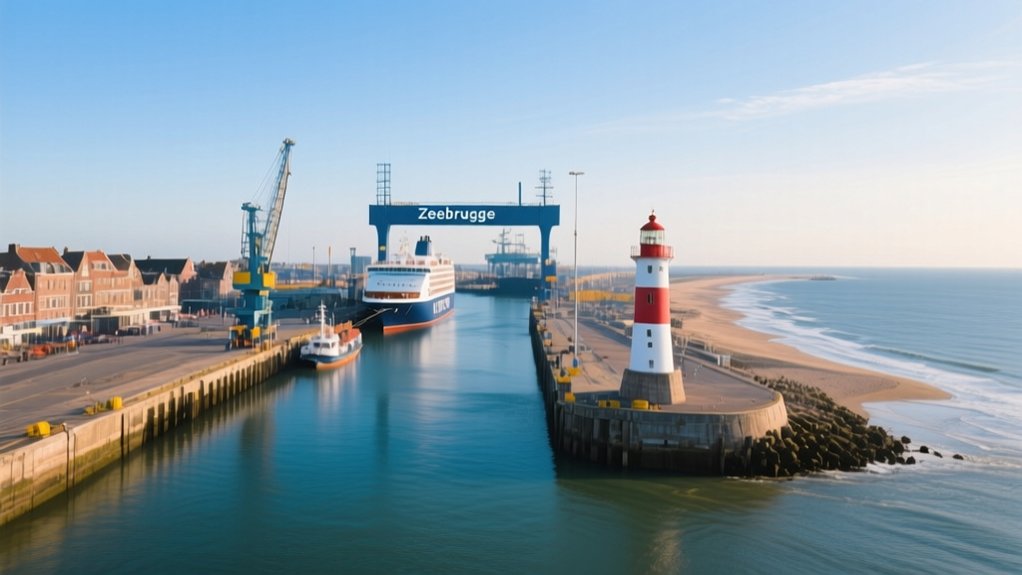
Zeebrugge Cruise Port Guide
I discovered the secret to maximizing your Zeebrugge port day—but most cruise passengers never learn it.
In this guide
Try one free personalised day plan — built around your ship’s actual arrival and departure times. Then get every port on your cruise done the same way from £7.99 (about $10).
Cruise Port Overview: What to Expect
Zeebrugge operates as a working port that happens to receive cruise ships, which means authentic Flemish culture exists here but requires effort to access beyond the terminal perimeter. The port sits at a distance from the town centre—you cannot walk it—so you need transport arranged within minutes of leaving your ship, otherwise you’ll lose significant time to logistics rather than exploration.
The terminal building is purely functional. It contains basic amenities and cafés priced for a captive audience, so treat it as a place to pass through rather than linger. Your actual decision point is choosing between Bruges, which features prominently on most cruise itineraries and merits the journey, exploring Zeebrugge‘s own offerings such as coastal walks and maritime sites, or attempting both by dividing your hours carefully.
Ships use a modern dock where shuttle services theoretically run to town but operate on limited schedules and often reach capacity quickly. Taxis wait outside but charge premium rates applied to cruise passengers. Local buses represent substantially better value and work well for reaching Bruges—they run regularly, follow predictable routes, and cost appropriately for the distance covered. Independent minibus operators available for advance booking undercut ship-organised excursions and offer the flexibility that rigid tour schedules eliminate. You can book guided tours through cruise lines or third-party providers to ensure structured experiences aligned with your interests.
The climate on this coast shifts unpredictably regardless of season, so pack layers accordingly. Flanders’ coastline has genuine appeal separate from medieval town centres if your interests extend beyond architecture. Success during your port day depends on settling your destination before you disembark, not making decisions while standing in the terminal hoping for direction. Your hours ashore are finite, so purposeful planning determines how well you use them.
Getting From the Port to Town
The shuttle bus from your ship to the port exit runs on the port’s schedule, not yours, which means you’ll either wait or miss it entirely while other passengers board ahead of you. This is precisely why your transport decision matters before you walk down the gangway.
Local buses departing from just outside the terminal cost substantially less than taxis and run frequently enough that you won’t waste hours waiting. They’re regular services for residents rather than tourist operations, so pricing reflects actual distance rather than the premium applied to cruise passengers. The route to Bruges is straightforward and costs a fraction of what ship excursions charge for the same journey.
If you’re exploring Zeebrugge itself rather than heading inland, these same buses connect you to the seafront and maritime sites without the friction of organised tours. Independent minibus operators you can book online before arrival offer another strong option, particularly if you’re travelling with others or want door-to-door convenience without the markup of ship-organised excursions. Popular operators fill quickly during cruise season, so booking several days ahead secures both your seat and better rates than last-minute scrambling produces.
Taxis are genuinely available but deliberately expensive, charging rates calibrated specifically for cruise passengers with limited time and no local knowledge. Use them only if you’re running late and can’t catch a bus, treating the premium as the cost of poor planning rather than your only option. The moment you disembark, head straight for the bus stop rather than lingering at the terminal, because waiting there costs you actual time ashore.
The Must-Do Experience: Start Here
Most cruise passengers book ship excursions to Bruges because they assume independent travel requires too much planning, but the opposite is true—organising your own transport costs less and gives you more control over how you spend your time. The choice between Bruges and staying in Zeebrugge matters because it dictates everything about your port day, so settle this before you disembark.
If Bruges interests you, arrange a minibus or guided tour through an independent operator several days before your port date, as the reliable companies get booked out quickly during cruise season and advance booking means better rates than negotiating at the terminal. These tours run at a fraction of the ship’s price, follow schedules that align with typical port windows, and avoid the queuing chaos that comes with large ship groups. The journey requires a decent stretch of time, but the medieval streets, canals and markets offer something the port terminal cannot.
If you prefer to stay in Zeebrugge, spend your morning exploring the waterfront and maritime sites without feeling pressured to rush through everything. Local buses are cheap and straightforward, avoiding the markup you’d pay for a commercial tour operator. Consider purchasing a local eSIM data plan to stay connected throughout your port day without incurring roaming fees. The real distinction is treating your port day as actual time to explore rather than an obligation—Bruges rewards effort and commitment, while Zeebrugge suits those content with a quieter coastal experience without expecting anything flashy.
History Culture and the Top Sights
Zeebrugge’s reputation rests almost entirely on its seafront, which drives most cruise passengers either inland to Bruges or into vacant wandering along the water’s edge. The town actually has legitimate weight in twentieth-century military history—the German U-boat installations, the 1918 raid memorial, and the In Flanders Fields Museum across in Ypres contain material that matters because it shaped what happened here, not because it fits a narrative package. Your port day will feel either substantial or wasted depending entirely on whether you engage with that history or treat Zeebrugge as a transit point.
The Seafront Museum and U-boat memorial work as local options if you have limited time or energy. Both charge modest fees and operate straightforwardly without attempting to amplify their significance through design or marketing. The quality of interpretation is direct rather than polished, which means the experience depends on whether military history actually interests you—if it doesn’t, you’ll find these spaces tedious and small.
The stronger option involves arranging a guided tour to Ypres and the Flanders battlefields before your ship arrives. These tours operate year-round and contain substantially more historical substance than anything you’ll encounter within Zeebrugge itself. Booking several days in advance matters because operators fill their schedules during cruise season, and waiting until you reach port usually means missing availability entirely. The commitment of spending most of your day traveling outside town pays off if you’re serious about understanding what occurred here, but if your interest in the subject remains peripheral, the local waterfront sites are the practical alternative.
Beyond the Centre: Day Trips and Alternatives
The ship’s excursion to Ypres costs more than it should because you’re paying a middleman markup on what amounts to a straightforward coach journey and guided walk. Independent operators offer the same experience with smaller groups and more flexible timing for substantially less money, but you need to book several days before arriving at port. The savings are real enough to warrant the extra planning.
Getting to Ypres independently requires minimal effort. Walking through the port isn’t allowed, but once the free port shuttle drops you at the terminal exit, Zeebrugge’s railway station is a walk of around fifteen to twenty minutes, or you can take the coast tram to Blankenberge station. From either, regular trains reach Bruges where onward connections to Ypres depart throughout the day. You’ll have enough time to explore the town and battlefields before needing to return, though this approach demands slightly more effort than boarding a coach.
If independent travel feels too complicated given your port time, book a private tour operator online before you sail. Reputable companies advertise in cruise forums and travel sites, and you should search specifically for operators running tours on your ship date. Popular operators fill their allocations quickly during cruise season, so booking two weeks ahead gets you better rates and guarantees a spot without the premium markup that comes with booking through your cruise line. When comparing options, explore guided excursions offered by established third-party providers to find the best value for your budget and preferences.
Shore Excursion or Going It Alone
The ship’s excursion desk relies on your uncertainty to sell premium packages, banking on the fact that most passengers won’t realise how straightforward independent exploration actually is in Zeebrugge. The real decision isn’t whether to book an excursion or go alone—it’s whether you’d rather pay a considerable markup for convenience or invest a small amount of planning to reclaim that money for better use ashore.
If you’re visiting Bruges, booking an independent operator beforehand costs considerably less than the ship’s guided option and gives you control over how long you stay. Search for reputable tour companies advertising to cruise passengers and book several weeks ahead, as the best operators fill their allocations by mid-cruise season, and booking directly rather than through your ship saves you a meaningful amount. You’ll join a smaller group and often receive more straightforward commentary than a rushed coach full of cruise passengers.
Alternatively, if you want complete freedom and don’t mind finding your way independently, the railway station walk is straightforward, and frequent connections mean you won’t waste time waiting. This approach works best if you’re comfortable with basic navigation and don’t need assistance through changes between transport.
The uncomfortable truth is that the ship’s excursion staff benefit from you feeling out of your depth. They’re not wrong that you need a plan, but their solution is intentionally the most expensive one available. Whether you choose an independent operator or go it alone, booking ahead online removes the pressure that makes you vulnerable to overpaying at the excursion desk.
🗺️ Tours & Experiences at This Port
Skip the ship’s overpriced excursions — browse top-rated independent tours trusted by thousands of cruise passengers.
Small Things That Make a Difference in Zeebrugge
Zeebrugge’s waterfront looks impressive from the ship, but the Old Town feels entirely different once you’re walking through it—and that shift is worth understanding. The medieval streets of Bruges are genuinely worth your time, but they’re also where cruise passengers get caught in a particular trap: spending money on mediocre meals in restaurants positioned at corners with the best sightlines rather than where locals actually eat.
Tourist pricing in Bruges follows foot traffic, not quality. Anywhere near the main square will cost you considerably more for noticeably worse food, so walking further away from the crowds pays off in both your wallet and your plate. Restaurant staff will recommend their establishment whether it deserves it or not, so use your phone to check recent reviews from actual visitors rather than relying on proximity or appearance.
Beer, by contrast, is genuinely good value in Belgium once you move away from the tourist core. A quality local ale costs only slightly more than a mediocre coffee in the main square, making it worth trying rather than skipping. The mistake most cruise passengers make is assuming everything is overpriced and defaulting to the ship’s offerings, which means missing out on something actually worth the money.
Book an independent walking tour of Bruges if you want structure and local knowledge without the cruise ship markup. If you’re exploring independently, start early enough that you beat the coach tour crowds into the centre, which matters more for atmosphere than for avoiding queues.
🗺️ Tours & Experiences at This Port
Skip the ship’s overpriced excursions — browse top-rated independent tours trusted by thousands of cruise passengers.
Your Port Day: A Sample Itinerary
Most passengers waste the gap between ship arrival and the first coach tours queuing for overpriced terminal coffee. Your actual advantage lies in getting to Bruges before the organised groups arrive, which means disembarking quickly and heading straight to Zeebrugge train station rather than lingering at the port.
Once the port shuttle drops you at the terminal exit, the walk to the station is straightforward, or you can take the coast tram to Blankenberge station if you prefer not to walk. A short train journey gets you into the medieval centre while independent travellers are still orienting themselves and the main square remains relatively clear of tour groups. This timing matters more than any specific attraction because you’ll actually be able to move through the streets without constant obstruction.
Walk the quieter streets branching out from Belfry Tower for your first hour. Skip the tower itself—the queue is long, the cost is disproportionate, and the view from bridge level is essentially identical. Instead, use this time to get your bearings and locate a decent café away from the tourist areas, where you can have coffee and decide what you actually want to do rather than rushing into whatever seems most famous.
By mid-morning, either book an independent walking tour online if you want structured exploration, or continue on foot if you prefer working things out yourself. Either way, eat lunch in the quieter residential areas rather than near Sint-Salvatorskathedraal, where restaurants charge significantly more for the same food you’ll find elsewhere.
Leave yourself enough time to return to Zeebrugge before your departure, accounting for the possibility of minor delays. The train journey back is straightforward, but train schedules don’t align with cruise ship timing, so don’t rely on cutting it close.
🗺️ Tours & Experiences at This Port
Skip the ship’s overpriced excursions — browse top-rated independent tours trusted by thousands of cruise passengers.
Book your Zeebrugge day
Tours for this port, compare before you book
Getting around in port
✈️ Before you sail: eSIM, insurance, luggage, flight delays
Ships In Zeebrugge
Upcoming calls from our sailings tracker, updated regularly.
Queen Anne
CunardMon 12 Oct
Britannia
P&O CruisesTue 13 Oct
⚓ 07:00–19:00
ms Rotterdam
Holland AmericaMon 19 Oct
⚓ 08:00–17:00
Aurora
P&O CruisesMon 19 Oct
⚓ 07:00–17:00
MSC Virtuosa
MSC CruisesTue 20 Oct
⚓ 11:00–20:00
Queen Mary 2
CunardThu 22 Oct
⚓ 08:00–17:00