Civitavecchia Cruise Port Guide
Just discovered why cruise experts skip Civitavecchia’s port entirely—but Rome awaits with one secret.
In this guide
Try one free personalised day plan — built around your ship’s actual arrival and departure times. Then get every port on your cruise done the same way from £7.99 (about $10).
Staying in Civitavecchia before or after your cruise? Answer a few quick questions and we’ll point you to the best part of town for you, including flat, step-free options, then show hotels that fit.
Cruise Port Overview: What to Expect
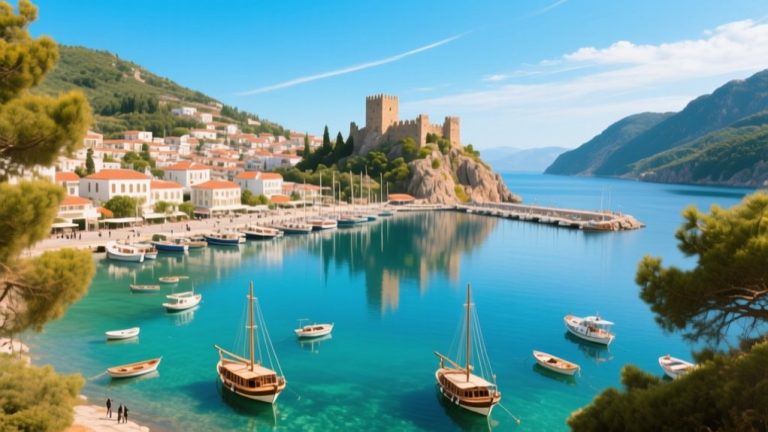
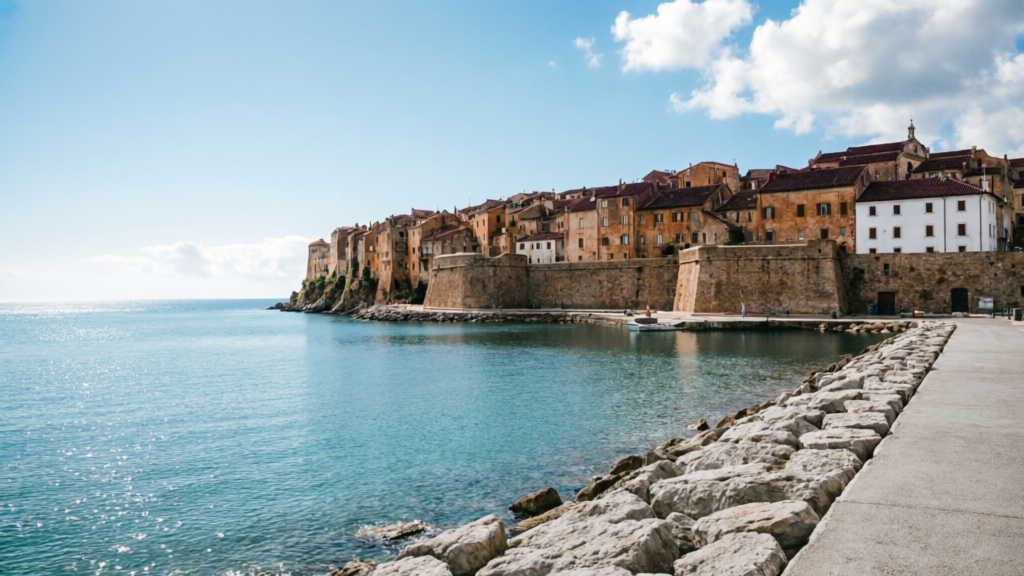
Civitavecchia is the port for Rome, and that is the whole of it. The town is a pleasant enough working port with a Michelangelo-designed fort on the waterfront, but nobody sails here for Civitavecchia. They sail here for the city about 80 km down the coast, and everything about the day turns on that distance.
Be honest with yourself about the arithmetic before you plan anything. Getting to Rome and back takes the better part of three hours of your day whichever way you travel. On a typical call of nine or ten hours ashore that leaves you six or seven hours in the city, which is enough for two or three things done properly and nothing like enough for the list most people arrive with.
Ships berth at the quays inside the commercial port, and you cannot walk out through it — the port runs free shuttle buses from each berth to the passenger exit at Largo della Pace, and that is where your day actually begins. It is a proper cruise port rather than a cargo dock: several terminals, thousands of passengers a day in season, and it is used to handling them.
The one decision that matters is how you are getting to Rome, and it wants making before you sail rather than on the dockside. Tours and transfers from Civitavecchia can be booked direct if you would rather not work the trains out.
Getting From the Port to Town
Everyone starts the same way: the free port shuttle from your berth to Largo della Pace, just outside the dock gate. In peak season with several ships in, allow twenty minutes for that alone.
From Largo della Pace, Civitavecchia railway station is about 15 minutes on foot, a flat walk of roughly a kilometre and a half through ordinary streets. It is not industrial, it is not unsafe, and it is signposted. A taxi covers it in a couple of minutes if you would rather.
The train is the FL5 regional line, and which Rome station you get off at matters more than most guides admit, because they are not equally useful:
Roma San Pietro is the first and the nearest, about 40 minutes, and it puts you a short walk from St Peter’s and the Vatican Museums. Trastevere is about 50 minutes, handy for the Trastevere quarter and a tram into the centre. Ostiense is about 55 minutes and connects to métro line B. Termini, Rome’s main station, is about 70 minutes — the furthest of the four, and the one most passengers are told to aim for by default. If the Vatican is your priority, getting off at San Pietro saves you half an hour each way.
Buy a ticket at the machine or the counter at Civitavecchia and validate it before boarding — Italian regional tickets must be stamped, and inspectors do fine people who have not.
The other options are a pre-booked private driver, who meets you at Largo della Pace and returns you there, or the ship’s coach. Both remove the walk and the timetable; neither removes the 80 km.
If you are flying in or out around this call, or you simply want the transport settled rather than taking your chances at the rank, a pre-booked private transfer puts a named driver at an agreed place and time. It is worth more here than at a port where you are only ashore for the day.
The Must-Do Experience: Start Here
With six or seven hours in Rome, pick one area and do it properly. The two that work from Civitavecchia are the ancient centre and the Vatican, and trying to do both in a port day is how people end up sprinting for a train.
For the ancient centre, the single ticket covering the Colosseum, Roman Forum and Palatine Hill is the one to book, and it is timed entry that genuinely sells out in season. Book it direct on the official site as soon as you have your date. Get off the train at Ostiense and take métro line B two stops to Colosseo, or come in to Termini and take line B from there.
The Forum is the better half of that ticket. The Colosseum is the photograph, but the Forum and the Palatine above it are where you can actually walk through a Roman city — the senate house, the temples, the imperial palaces on the hill with the whole site laid out below. Allow two to three hours for the three together and wear something you can walk on uneven stone in.
For the Vatican, get off at San Pietro. St Peter’s Basilica itself is free to enter but has a security queue that can run long, and there is a dress code that is enforced: shoulders and knees covered, for men as well as women. The Vatican Museums and the Sistine Chapel need timed tickets booked well ahead, and they are closed on Sundays apart from the last Sunday of the month, which catches people out.
🗺️ Tours & Experiences at This Port
Skip the ship’s overpriced excursions — browse top-rated independent tours trusted by thousands of cruise passengers.
History Culture and the Top Sights
The Pantheon is the most remarkable building in Rome and the one most people underrate. It is a first-century temple turned church, its dome still the largest unreinforced concrete dome in the world after nineteen hundred years, with a nine-metre hole open to the sky at the top. Rain comes straight in and drains through holes in the floor. It is ticketed and worth booking a slot online rather than joining the queue on the piazza.
Around it sits the walkable heart of Rome. The Trevi Fountain, Piazza Navona on the footprint of Domitian’s stadium, the Spanish Steps and the Campo de’ Fiori market are all within fifteen minutes of each other on foot, and the walk between them through the lanes is as good as the stops.
The Capitoline Museums on the Campidoglio are the oldest public museums in the world and hold the she-wolf, the bronze Marcus Aurelius and the fragments of the colossal Constantine. The terrace behind them gives you the best free view over the Forum in Rome, which is worth knowing even if you do not go in.
The Palatine Hill is included on the Colosseum ticket and most passengers skip it, which is exactly why it is worth an hour: imperial palaces, gardens and a view across the Forum without the crush.
And back at the port, if your call is short or the train has beaten you, Civitavecchia has the Forte Michelangelo on the waterfront, begun under Julius II with the upper keep attributed to Michelangelo himself, and a decent seafront promenade either side of it.
Beyond the Centre: Day Trips and Alternatives
Not every call has to mean Rome, and on a short one it probably should not.
Tarquinia, twenty minutes up the line, has the painted Etruscan tombs that are a UNESCO site — underground chambers frescoed two and a half thousand years ago with dancers, banquets and hunting scenes, and far fewer visitors than anything in Rome. The National Museum in the town holds the winged horses.
Cerveteri, in the other direction, has the Banditaccia necropolis: a whole Etruscan city of circular tomb mounds along proper streets, which you walk through rather than look at.
Ostia Antica is the one to consider if you want Roman ruins without the Roman crowds. It was the port of imperial Rome, silted up and abandoned rather than built over, so the streets, warehouses, baths and apartment blocks survive largely intact. It is on the way in from Civitavecchia rather than beyond Rome, and it is a genuine alternative to the Forum rather than a consolation prize.
Closer still, Santa Marinella and Santa Severa are a few minutes down the coast by train, the second with a castle sitting directly on the beach.
Shore Excursion or Going It Alone
This is the port where the question actually has weight, because the distance is real and the all-aboard time is not negotiable.
Going independently is straightforward and a lot of people do it: shuttle, fifteen-minute walk, FL5 into Rome, and you are in the city on your own terms with your own pre-booked tickets. The trains run frequently through the day and the route is not complicated. What you are carrying is the risk. If a regional train is cancelled or the line is disrupted, the ship does not wait for you, and getting from Rome back to Civitavecchia at short notice is an expensive taxi.
The ship’s excursion buys you exactly one thing, and it is not the commentary or the lunch stop: it is the guarantee that the ship waits. On a port 80 km from the sights, with a fixed all-aboard, that guarantee is worth more than it is almost anywhere else on a Mediterranean itinerary.
A sensible middle route is a pre-booked private or small-group transfer that collects from Largo della Pace and returns you there. It costs more than the train and less than the coach, it removes the timetable, and the operator is watching your ship’s schedule as closely as you are.
Whichever you choose, build in a bigger margin than feels necessary. Aim to be back at Largo della Pace at least an hour before all-aboard, because the port shuttle queue at the end of the day is its own event.
Practical Tips: Money, Weather and Timing
Italy uses the euro and cards are accepted almost everywhere, including ticket machines and museums. Keep a little cash for a coffee bar.
Roman coffee has rules that are worth knowing. You pay at the till first, take the receipt to the bar, and drink your espresso standing up — sitting at a table costs more for the same cup. Cappuccino is a breakfast drink and ordering one after lunch marks you out, though nobody will actually stop you.
Rome in July and August is genuinely punishing: high thirties, very little shade at the Forum, and the stone throws the heat back at you. Carry water and refill it — the city’s nasoni, the little cast-iron street fountains, run cold, clean drinking water all over the centre and are free. Spring and autumn are far better sailing dates for this port.
Wear shoes with grip. Roman sampietrini, the basalt cobbles, are polished glassy by two thousand years of feet and are lethal in rain.
Pickpocketing is organised on the city buses towards the Vatican, at Termini and around the Colosseum. Bag in front, nothing in back pockets. The people with clipboards and the ones offering to help at ticket machines are working, not helping.
Book the Colosseum, the Vatican Museums and the Pantheon online in advance. These are not queue-jumping luxuries any more — several of them will not sell you a same-day ticket at the door at all in season.
🗺️ Tours & Experiences at This Port
Skip the ship’s overpriced excursions — browse top-rated independent tours trusted by thousands of cruise passengers.
Ship wi-fi is slow and charged by the day, and roaming outside your own network can cost more again. A local eSIM data plan arranged before you sail is the cheapest way to have maps, timetables and messaging working the moment you walk down the gangway in Civitavecchia — and it matters most if you are travelling independently rather than following a guide.
Your Port Day: A Sample Itinerary
Ship alongside early in the morning, all aboard in the early evening, Colosseum ticket booked for mid-morning.
Take the first port shuttle to Largo della Pace rather than a later one, walk the fifteen minutes to the station and take an FL5 train in. Get off at Ostiense and change to métro line B for two stops to Colosseo, which puts you at the gate with time in hand.
Colosseum, then straight through the same ticket into the Forum and up onto the Palatine. That is the whole morning and it is the right way to spend it. Come out at the Forum’s western end, up the steps to the Capitoline terrace for the view back over what you have just walked, then down into the lanes.
Lunch a few streets off the main squares rather than on them, then the Pantheon on your booked slot, the Trevi Fountain and Piazza Navona on foot — they are all within a quarter of an hour of each other.
Start back earlier than you want to. Walk or take a bus to Termini or Ostiense for the return FL5, and aim to be at Largo della Pace at least an hour before all-aboard.
If the Vatican is what you came for, run the day the other way entirely: off at San Pietro, basilica first thing before the security queue builds, museums on a booked slot, and skip the ancient centre altogether. Trying to fit both into one port call is how people miss the ship.
On a short call — anything under eight hours ashore — do not go to Rome at all. Tarquinia’s painted tombs or Ostia Antica will give you a better day and get you back without the anxiety.
How do I get from the ship to Rome?
Do I need to book the Colosseum or Vatican tickets in advance?
Should I book a shore excursion or go independently?
Book your Civitavecchia day
Tours for this port, compare before you book
Getting around in port
✈️ Before you sail: eSIM, insurance, luggage, flight delays
Ships In Civitavecchia
Upcoming calls from our sailings tracker, updated regularly.
Costa Toscana
Costa CruisesThu 8 Oct
⚓ 08:30–19:00
Legend Of The Seas
Royal CaribbeanThu 8 Oct
⚓ 07:00–20:00
Celebrity Ascent
Celebrity CruisesFri 9 Oct
⚓ 05:00–17:00
Costa Smeralda
Costa CruisesFri 9 Oct
⚓ 08:30–19:00
Scarlet Lady
Virgin VoyagesFri 9 Oct
⚓ 08:00–20:00
MSC Divina
MSC CruisesFri 9 Oct
⚓ 07:00–17:00