Amalfi Cruise Port Guide
Learn insider secrets to navigating Amalfi’s crowded port, discovering authentic experiences, and avoiding tourist traps—but there’s one crucial mistake most cruisers make.
In this guide
Try one free personalised day plan — built around your ship’s actual arrival and departure times. Then get every port on your cruise done the same way from £7.99 (about $10).
Cruise Port Overview: What To Expect
Amalfi’s port is small enough that it gets congested quickly, so expect your morning to feel packed before you’ve had your coffee. The pedestrian tunnel from the quay deposits you into a narrow main square lined with shops, cafés, and tour operators all vying for business. The advantage is genuine: everything of value sits within walking distance, so you won’t lose hours to transfers or shuttle bus queues.
Once you leave the immediate waterfront, the town reveals itself as reasonably pleasant. Pastel buildings cling to the cliffs above narrow streets, family-run restaurants sit tucked into alleyways, and the cathedral occupies the town centre. Other cruise passengers will be around, particularly in the first hours after tender boats arrive, but they disperse quickly if you head uphill or take the coastal paths instead of staying on the main strip.
Waterfront food carries premium pricing—coffee and a pastry will cost more than feels reasonable. A short walk inland brings you to local restaurants where prices reflect reality rather than tourist inflation. The practical approach is straightforward: orient yourself, get decent coffee away from the harbour, then commit to either a coastal walk, a trip up to Ravello, or a boat excursion to Positano. Book your chosen activity online before your port day, as popular independent operators book out weeks ahead during busy months.
Getting From the Port To Town
Tender boats put you straight onto the main quay, so you’re effectively in town the moment you step off. There’s no separate terminal building to find your way through, which cuts out one layer of confusion, though it does mean thousands of passengers squeeze through the same narrow pedestrian tunnel within a tight timeframe.
Walking works best for your first hour ashore. The town centre sits directly uphill from the waterfront, and whilst the streets are steep enough to notice, they’re short enough that you’ll reach the cathedral square in under ten minutes without breaking stride. The souvenir shops and tour desks along the way aren’t worth your attention yet—keep climbing.
If you want to reach places like Ravello or Positano, book a private tour or water taxi before you arrive. Independent operators and local guides fill their schedules weeks in advance during busy periods, and arranging this online beforehand costs less than cruise line packages and gives you actual control over timing. Waiting to book onboard means paying a premium for fewer options. Consider exploring guided tours at cruise ports to discover curated experiences that maximize your time at this destination.
Taxis are available but unnecessary unless you have mobility concerns. Local drivers know how to handle cruise crowds, and finding your way becomes straightforward once you’ve left the waterfront congestion behind. Climb away from the dock area in your first quarter-hour, get your bearings on higher ground, and the rest of your day becomes considerably more manageable.
The Must-Do Experience: Start Here
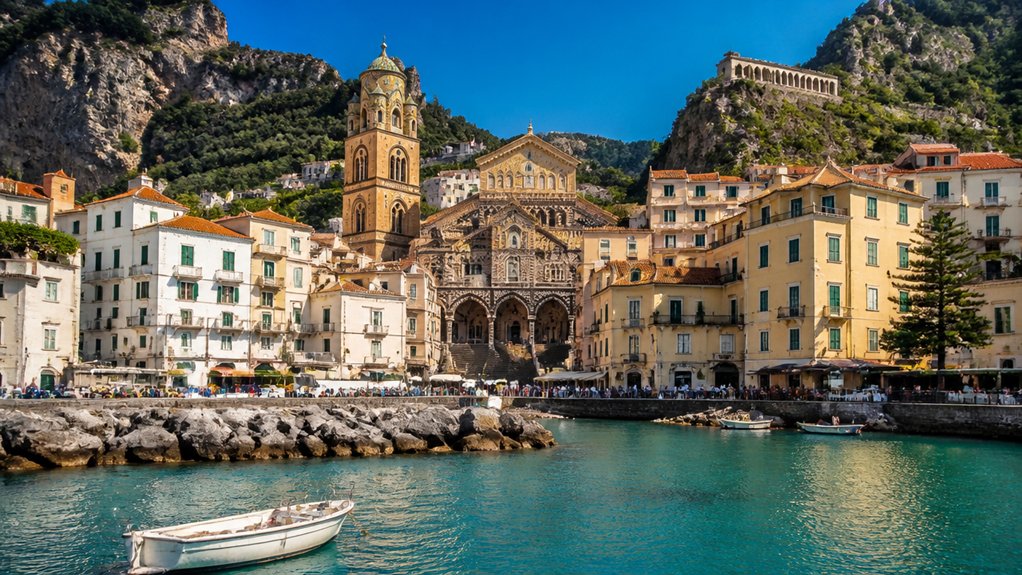
The Cathedral of St Andrew dominates Amalfi‘s centre, yet most cruise passengers bypass it entirely because they assume the crowds make it inaccessible. In reality, the foot traffic thins considerably once you leave the waterfront shops and start climbing uphill. You can reach the cathedral square within a short walk from the water.
The building’s Arab-Norman design and bronze doors cast in Constantinople justify the climb, and the adjoining cloister provides actual quiet and shade even during peak season. A small entry fee applies, and understanding the cathedral’s significance gives you genuine insight into why medieval Amalfi functioned as a major trading power. Without visiting here first, you’re essentially missing the reason this town existed at all.
The practical advantage of starting here is strategic rather than aesthetic. By positioning yourself at the top of town early, you’ve tackled the main historical site before the midday crush arrives, which means you’ve also secured better ground for the rest of your day. The cathedral square works best in early morning light with manageable visitor numbers.
Booking a guided walking tour with a local historian before you arrive substantially changes what you retain from your visit. Independent guides typically offer more substantive information than standard ship excursions and often cost less, though they book up quickly during cruise season. A knowledgeable guide transforms a routine checklist visit into something that actually contributes to your understanding of Mediterranean history.
History Culture and the Top Sights
Amalfi’s reputation rests almost entirely on paper production, yet the Paper Museum sits nearly empty because most visitors never venture inside. The town was a serious medieval maritime republic that competed with Venice and Genoa, and everything about its layout reflects that commercial past. The medieval arsenal where galleys were built still stands near the waterfront, and the cramped streets, defensive towers, and buildings pressed toward the waterfront all echo that trading heritage.
Understanding this mercantile context changes how you experience the cathedral. Rather than ticking off a tourist box, you’re looking at a structure that represented actual economic and political power in its time. The Sant’Andrea cloisters nearby show how wealthy merchant families displayed their status through ornate columns and deliberate architectural choices.
The ceramic tiles covering building facades throughout town aren’t merely decorative. They’re records of trade routes connecting Amalfi to North Africa and the Levant, which means you’re literally looking at evidence of medieval commerce. Paying attention to these details separates a genuine understanding of the place from a generic Mediterranean port visit.
Booking a local historian through an independent guide service before your ship arrives gives you access to someone who actually knows the back streets and the town’s real functioning life. Most reputable independent guides operate through dedicated platforms online and fill quickly during cruise season, so you need to secure your spot well in advance. The cost involved typically repays itself through what you’ll actually understand about how this town worked and continues to work.
Beyond the Centre: Day Trips and Alternatives
Most cruise passengers stay in the main piazza, so the actual town exists in the neighbourhoods that climb the hillside behind the cathedral. You’ll see locals doing ordinary things—hanging washing, waiting at the bakery, children running through narrow streets—rather than performing for visitors. The crowds noticeably thin the moment you step away from the waterfront.
Ravello sits above the coast and provides a straightforward escape from the tourist pressure without consuming your entire day. Local transport gets you there without fuss, you can spend a few hours walking its quieter streets and visiting Villa Rufolo’s gardens, then return before your ship leaves. The views across the coastline actually justify the journey, and eating lunch costs significantly less than waterfront restaurants charge.
Atrani sits just beyond Amalfi’s eastern edge and functions as the practical alternative to organised tourism. It’s small enough to cover thoroughly in a couple of hours, has an active marina where fishermen work, and contains a cathedral that seems absurdly large for the size of the town. You’ll understand immediately why locals spend their time here instead.
Booking an independent small-group walking tour that covers Ravello and surrounding villages gives you access to local knowledge without paying the cruise line’s markup. Reputable operators book up during cruise season, so reserving your place online in advance is necessary—you’ll pay substantially less than what the cruise desk charges for the same experience. You can also explore guided excursions tailored to your interests rather than the standard itinerary. This also means you’re not rushing to catch a ship departure; you move at an actual pace and actually pay attention to what you’re seeing.
Shore Excursion or Going It Alone
The cruise desk sells you convenience and certainty; what you actually get is a crowded group, inflated costs, and an itinerary designed around ship timings rather than what’s worth seeing. The official excursions to Ravello or the Lemon Coast are competent enough, but you’re paying considerably more for less flexibility and the constant anxiety about missing your departure.
Going it alone requires only confidence and basic planning. Step off the ship, buy a local transport ticket, and move at your own pace without a guide reciting facts at you or herding you toward overpriced lunch stops. The route between Amalfi and Ravello operates frequently enough that you won’t spend your morning waiting; you’ll spend it actually exploring.
The genuine advantage of an independent small-group walking tour lies in local knowledge you cannot get alone—which restaurants locals actually frequent, which side streets contain genuine artisan workshops, why certain neighbourhoods matter historically. These operators know the coast intimately and build itineraries around genuine experience rather than logistics. Popular tours fill rapidly during cruise season, so booking your place online in advance secures your spot and typically costs a fraction of what the ship charges.
You move without rushing, eat where locals eat, and finish your day having learned something rather than having ticked boxes. The decision genuinely comes down to whether you want to be managed or guided. Most passengers benefit from the latter.
Local Knowledge Worth Having Before You Dock
The harbour at Amalfi floods with cruise passengers in the morning, which means every restaurant terrace within sight of the dock becomes a holding pen for tour groups eating mediocre pasta at inflated prices. The solution is ruthlessly simple: ignore the seafront entirely for your first hour and climb inland instead. You’ll find yourself alone on steep lanes where locals still live, where a café costs what it should, and where you can actually think.
The beach at Amalfi itself looks postcard-worthy but is cramped and overrun by lunchtime; locals recognise it as tourist territory and rarely venture there. Head east toward Atrani instead—it’s a genuine fishing village that hasn’t been entirely consumed by commerce, and the walk itself is worth the trip. You’ll pass terraced lemon groves, encounter actual residents, and arrive somewhere that feels like somewhere rather than a theme park interpretation of the coast.
Currency exchanges near the port charge substantial commissions; use your bank card at any ATM in town instead. The main piazza accepts cards everywhere, but smaller establishments inland still want cash, so withdraw what you need early. If you’re considering a hiking tour or boat excursion, book your place online before you arrive—the best independent operators fill their boats with cruise passengers who’ve planned ahead, and you’ll secure a spot at considerably less than what the ship’s desk charges for the same experience.
Your Port Day: A Sample Itinerary
Most cruise passengers spend their first ninety minutes queuing for a table at the waterfront, so you’ve already lost the productive part of your day before you’ve started. Head straight inland up the steep lanes behind the piazza instead—you’ll eat breakfast alone in a local café for less money and actually taste your coffee. Spend your morning in the neighbourhood above town where linen still hangs between buildings and the only other tourists are the ones who’ve worked it out too.
By midday, head down to the coastal path and walk east toward Atrani. The walk takes you through terraced lemon groves and along clifftop tracks that shift your position away from the crowds rather than deeper into them. Stop for lunch in Atrani at one of the restaurants set back from the water—you’ll pay considerably less than the seafront places and eat better food alongside actual residents.
Book a boat tour or hiking excursion before your ship day arrives if you want to go on one. Independent operators offer sea cave trips and coastal walks that fill up fast with cruise passengers, and booking online in advance secures your spot at a lower rate than the ship’s desk. If you’ve booked ahead, you’ll be on the water by early afternoon when the tour groups have dissolved into their mandatory shopping hour—if you haven’t, you’ll spend your final hours browsing overpriced linen shops with everyone else.
Book your Amalfi day
Tours for this port, compare before you book
Getting around in port
✈️ Before you sail: eSIM, insurance, luggage, flight delays
Ships In Amalfi
Upcoming calls from our sailings tracker, updated regularly.
MSC Explora 1
MSC CruisesSun 23 May
⚓ 08:00–19:00
Le Ponant
MSC CruisesSun 6 Jun
⚓ 07:00–16:00
MSC Explora 1
MSC CruisesSun 20 Jun
⚓ 08:00–19:00
MSC Explora 1
MSC CruisesSun 18 Jul
⚓ 08:00–19:00
MSC Explora 1
MSC CruisesSun 15 Aug
⚓ 08:00–19:00
Le Ponant
MSC CruisesThu 26 Aug
⚓ 08:30–18:00