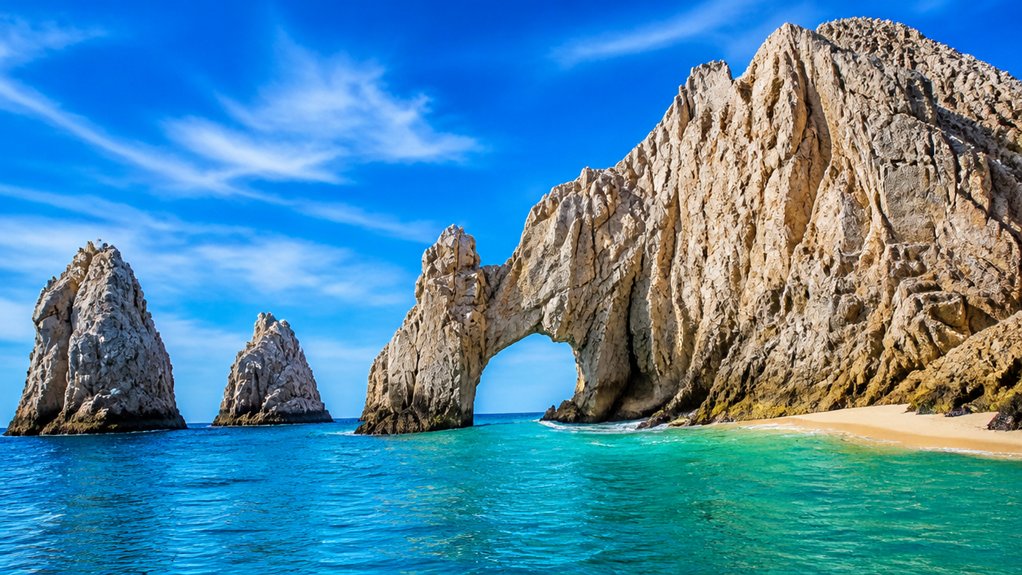
Cabo San Lucas Cruise Port Guide
Just discovered why cruise lines don’t want you reading this Cabo San Lucas guide—learn the secrets they’d rather keep hidden.
In this guide
Try one free personalised day plan — built around your ship’s actual arrival and departure times. Then get every port on your cruise done the same way from £7.99 (about $10).
Cruise Port Overview: What To Expect
Cabo San Lucas operates as a commercial zone first and a destination second. The marina complex where the tenders from your ship land exists primarily to separate cruise passengers from their money, with restaurants, shops and tour operators all priced accordingly. The port layout itself poses no navigation challenges—the waterfront area is straightforward to walk, though you’ll encounter the same chain establishments and souvenir retailers found in most cruise ports globally.
Authentic Cabo lies inland from the marina. Once you move beyond the immediate waterfront, you’ll find where locals spend their time and money, prices become reasonable, and you’re no longer navigating around other cruise passengers. The contrast between the touristy marina strip and the actual town is significant enough to matter for how you spend your hours ashore.
Booking independent tours before you arrive makes practical sense. Desert trips, snorkelling excursions and visits to surrounding towns typically cost considerably less than ship-organised alternatives and allow you to set your own pace without coordinating with dozens of other passengers. Shore excursions with tour operators who offer genuine value tend to fill their slots quickly, so waiting until you’re ashore often means accepting whatever remains available or paying premium rates for last-minute bookings.
Your time here becomes worthwhile when you treat the marina as a starting point rather than a destination. Whether you head toward the Pacific coastline, the inland mountains or simply find a local restaurant comes down to your own interests—but making an active choice about where to go matters far more than any inherent quality of the port itself.
Getting From the Port To Town
The marina sits removed from anywhere worth visiting, separated by commercial sprawl designed to funnel you toward overpriced cafes before you’ve even left the port. Walking inland takes longer than feels reasonable, but it’s still your best option. Taxis queue outside expecting you to cave after a few minutes of waiting, and their drivers price accordingly—they know exactly how long you’ll tolerate standing about.
Walking beats everything else because it actually teaches you how the place is laid out. Head away from the marina toward the centre and the atmosphere shifts noticeably within twenty minutes; local restaurants, independent shops and actual residential streets replace the tourist infrastructure. The route itself orients you far better than any transport could manage, and you’ll arrive at the town proper with genuine bearings on where things are.
For anything requiring transport beyond walking—snorkelling, desert trips, visits to nearby towns—book tours before you arrive. The decent operators sell out weeks ahead during busy season, and booking on the day means accepting whatever slots remain or paying substantially more for last-minute spots. A reputable outfit collects you directly from the port anyway, which eliminates the need to navigate the marina yourself or hunt for where things depart from once you’re ashore.
The Must-Do Experience: Start Here
Most cruise passengers queue for overpriced breakfasts at the marina while the actual town exists inland, away from the resort pools and fish-named cocktail bars designed for people spending corporate money. The waterfront runs on tourism theatre; the real Cabo happens once you walk past it. Your time is better spent in the old town where ordinary life continues regardless of cruise schedules.
Water activities matter more than anything land-based here. Snorkelling at Pelican Rock gives you decent marine life without the mediocre ship excursion markup, and you’ll sidestep the herded groups altogether. Book an independent operator before you arrive since reliable ones fill their slots weeks ahead during season, and they’ll collect you from the port rather than funnelling you through the marina’s sales gauntlet.
A sunset catamaran with a solid operator works equally well if snorkelling doesn’t appeal to you. You get the working harbour on your own terms, drinks included, and an atmosphere that bears no resemblance to whatever mass-market version your cruise line offers. Either option puts your money directly into actual experience rather than into wandering shops that exist in every port worldwide.
Book your water activity before leaving home because popular slots vanish by mid-morning on busy days. You’ll either face nothing available or pay substantially more for whatever remains. This decision cannot wait until you’re standing on the dock with limited options.
History Culture and the Top Sights
Cabo’s actual history goes back considerably further than the tourist infrastructure suggests, though the town makes little effort to publicize it. The old town centre has colonial buildings worth walking through, though “well preserved” would overstate the case—you’ll find decay and neglect mixed in with genuine restoration work in roughly equal amounts.
The town church sits at the main plaza and genuinely repays an hour of your time if you care about how ordinary Mexican life actually functions away from the tourist areas. It’s not an impressive cathedral; it’s a functioning neighbourhood church where local people pray, which makes it substantially more interesting than the polished heritage sites the cruise lines promote. Spend time here rather than browsing shops selling the same mass-produced goods you could buy in any other port.
For anything beyond exploring on foot, an independent local guide works far better than the standard ship’s tour. Local operators explain the actual context rather than delivering scripted lines, keep a reasonable pace instead of rushing you through predetermined stops, and charge significantly less. Book through a reputable independent operator before you arrive since morning slots get booked up quickly during cruise season, and you’ll sidestep the port’s official tour desks entirely.
The Museum of Natural History in the town centre covers local geology and marine life with straightforward presentation and solid educational content. It’s actually useful if you want to understand what you might see during a snorkelling trip, rather than spending more time in shops designed purely to take your money before departure.
Beyond the Centre: Day Trips and Alternatives
Most cruise passengers stay within the harbour area, which means the actual reasons Cabo differs from other Mexican ports remain largely unseen. The desert beyond town, the working fishing villages, and the marine environment that defines the region sit within reach—you simply need to arrange your own transport rather than follow the ship’s schedule.
Standard cruise excursions work against you in two ways: you spend half the day travelling with dozens of other passengers and the rest queuing behind them, while paying significantly more than necessary. A small-group snorkelling trip to the reefs, a desert ATV tour through the arroyos, or a visit to the beaches north of the marina cost substantially less when booked directly with local operators instead of through your cruise line. The ship’s tour desk will tell you everything is full by the time you arrive, but this rarely reflects reality—it reflects their commission structure.
Book any activity before you arrive, particularly for morning departures. The best guides fill their slots weeks ahead during season, and you’ll get a genuine operator rather than a corporate intermediary taking a cut. A reputable local operator will collect you from the port itself, which eliminates transport hassles entirely.
Alternatively, rent a vehicle or arrange a private driver through your accommodation before departure, then drive north along the coastal road toward Todos Santos. The route itself shows you landscape the cruise ships won’t mention, and you stop where you want rather than where someone else’s schedule demands.
Shore Excursion or Going It Alone
The ship excursion costs two or three times what you’d pay independently and delivers half the experience alongside people you’ve been dodging for three days. The cruise desk relies on your worry about missing the tender or getting turned around, neither of which will happen if you’re remotely organised. This anxiety is their business model.
Most travellers book ship excursions from habit rather than actual need. Cabo functions as a proper port with established transport links, English widely spoken, and local operators who depend on repeat business and online reviews to survive. That accountability matters in a way corporate tour companies simply don’t need to worry about—they’ll reschedule you for the next group rather than risk their reputation.
For snorkelling, book a local guide through their website before arrival and you’ll pay less while joining a boat with eight people instead of forty. Desert tours and coastal drives work the same way—search for operators based in Cabo itself, not those advertising through cruise websites. Ring them directly if you’re uncertain; any legitimate business will confirm their collection point at the port and provide an actual departure time rather than vague promises.
The one exception is a guided cultural or historical tour if you speak no Spanish and want proper context. Even so, check independent reviews first because the best guides typically aren’t connected to cruise lines at all.
Cabo San Lucas: Practical Details Worth Reading Twice
The harbour congestion you’ll encounter isn’t accidental—cruise lines deliberately space out tender departures to manufacture urgency that pushes passengers toward their paid excursions. Getting ashore within the first hour bypasses the worst of the queues, which become genuinely difficult by mid-morning. Cabo handles the volume fine; the bottleneck is deliberate.
Tipping expectations differ from what you’re used to at home. Staff here earn considerably less, so matching American percentages isn’t necessary, though courtesy itself registers far more than the size of your bill. Unofficial taxi operators hanging around the tender dock will promise deals they won’t deliver—negotiate fares beforehand with official drivers, most of whom are straightforward.
Cash remains essential despite what you might assume about modern ports. Small vendors, neighbourhood restaurants, and independent boat operators often lack card readers or actively avoid them. The ATMs nearest the cruise dock charge steep fees, so walking inland finds you better rates.
The bar scene’s reputation for excess is real, but the worthwhile places aren’t where other cruise passengers drink expensive margaritas at resort venues. Local establishments where residents actually spend evenings serve proper drinks at fair prices—order what the owner suggests rather than what’s on the laminated tourist menu.
Your Port Day: A Sample Itinerary
The single best decision you’ll make is booking an independent tour before you arrive, not through the cruise desk. Popular operators fill their spots weeks ahead, you’ll pay considerably less, and you’ll actually see something worthwhile instead of spending half your day on a coach with eighty other passengers.
Get ashore within the first hour to bypass the tender queues that become genuinely difficult by mid-morning. Head straight to the marina and arrange your boat trip from there rather than through the cruise desk; independent operators offering snorkelling, sport fishing, or trips to local beaches run tighter schedules and cost considerably less. Book these online before you arrive, as the best guides and smallest group sizes sell out fast for cruise passengers with limited time. Consider exploring guided excursions that showcase the region’s natural attractions beyond typical cruise itineraries.
By midday, walk inland from the waterfront into the neighbourhood streets where locals actually eat. Small taquerias and family-run restaurants serve proper meals at fair prices, and the owners will steer you right if you ask what’s good today. Grab cash from an ATM away from the dock to avoid steep fees.
Spend your afternoon either relaxing at a beach club if you’re done with activity, or explore the quieter corners of the old town away from the main strip. Return to the tender dock with at least forty minutes to spare before your ship’s all-aboard time, since harbour congestion is real and missing your departure isn’t the adventure cruise lines claim it is.
Book your Cabo San Lucas day
Tours for this port, compare before you book
Getting around in port
✈️ Before you sail: eSIM, insurance, luggage, flight delays
Ships In Cabo San Lucas
Upcoming calls from our sailings tracker, updated regularly.
Serenade Of The Seas
Royal CaribbeanThu 8 Oct
⚓ 08:00–18:00
Carnival Radiance
CarnivalFri 9 Oct
⚓ 06:30–14:30
Norwegian Joy
Norwegian Cruise LineFri 9 Oct
⚓ 11:30–19:00
ms Eurodam
Holland AmericaSat 10 Oct
⚓ 09:00–17:00
ms Zaandam
Holland AmericaSat 10 Oct
⚓ 13:00–19:00
Ruby Princess
Princess CruisesSat 10 Oct
⚓ 07:00–15:00