Beijing Cruise Port Guide
Beijing’s hidden gems await beyond the cruise terminal—discover why independent exploration beats packaged tours.
In this guide
Try one free personalised day plan — built around your ship’s actual arrival and departure times. Then get every port on your cruise done the same way from £7.99 (about $10).
Cruise Port Overview: What To Expect
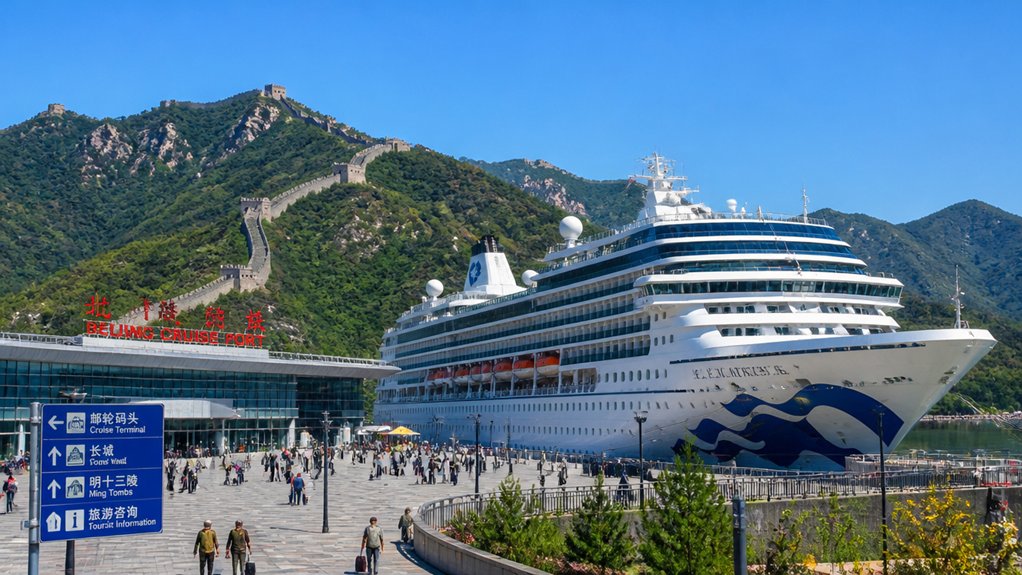
Beijing’s cruise terminal is a two to three hour drive from central Beijing, which immediately costs you time before you can do anything useful ashore. The terminal building is purely functional—modern enough, with standard facilities, but there’s nothing here worth your attention. Your time on land is limited, so every choice you make needs to count.
Getting from ship to terminal exit involves straightforward navigation and routine security checks. Taxis queue outside the terminal, though haggling over fares will eat into your hours ashore. Booking a private driver or hiring a guide in advance works better; demand from cruise passengers is high and spots fill quickly, while independent guides charge significantly less than ship-run tours and let you pursue what actually interests you rather than follow a packaged itinerary.
The drive into Beijing takes you through sprawling residential areas before the city centre appears. If you head northwest, you’ll see the Great Wall cutting across distant hills, which signals that trying to see everything is pointless—you’ll manage one or two places properly or several places badly. Weather swings dramatically depending on when you visit; summer is oppressively hot and humid, winter is freezing, and spring and autumn are the most practical seasons for walking around historic sites.
Most worthwhile attractions require transport and advance planning. Sort out your priorities before leaving the ship, arrange your transport beforehand, and accept that Beijing works better when you focus on a realistic number of things rather than attempt an exhausting dash between multiple locations.
Getting From the Port To Town
The real problem with getting from the port to central Beijing isn’t logistics—it’s that every option costs you two to three hours each way, and that’s time you won’t get back. Accept this upfront and plan accordingly.
Taxis are theoretically available outside the terminal, but negotiating a fare in a language barrier situation whilst other passengers queue behind you is precisely the sort of friction that ruins a port day. Your phone’s translation app helps, but so does simply booking a private driver beforehand through a service that specialises in cruise port transfers. Yes, it costs slightly more than a standard taxi, but you’ll know your price in advance, avoid the haggling theatre, and the driver will actually be waiting for you rather than requiring ten minutes of confused gesturing at the terminal entrance.
Ride-sharing apps work if you have mobile data sorted before disembarking, though surge pricing during peak cruise arrival times can push costs higher than you’d expect. Hotel concierge services or tour operators often offer transfer packages bundled with guided experiences, which can be worth considering if you’ve already decided what you want to see—you’re paying for convenience, not discovery.
Once you’re moving toward the city, the drive gives you a genuine sense of Beijing’s scale. Don’t waste this time checking your phone; watch the landscape shift from industrial outskirts to dense residential blocks. It’s the only free observation you’ll get, and it genuinely helps you understand how sprawling and compartmentalised the city actually is. When you arrive at your chosen neighbourhood, you’ll already have context for what you’re about to explore.
The Must-Do Experience: Start Here
Most cruise passengers arrive in Beijing determined to see the Great Wall before lunch, which is exactly why you should resist this plan. The wall requires a full day minimum, and squeezing it into a few hours will exhaust you without giving you anything worth remembering.
Spend your first hours in the Forbidden City instead. The palace complex is where Beijing’s actual history lives—not as stories but as physical space you can walk through and understand. Three focused hours here teaches you more about imperial power and Chinese dynastic rule than any rushed tour possibly could.
Enter from the southern gate and move north deliberately, letting the buildings themselves explain what you’re looking at. You’ll share the space with thousands of other visitors, but moving slowly rather than frantically means you’ll find actual quiet spots where you can think and observe without noise.
Book an independent guide through a reputable local operator before you arrive. The reliable guides get booked by cruise passengers quickly, they cost less than ship excursions, and they give you the flexibility that guided tours from the port don’t. A knowledgeable local guide transforms the experience from simply looking at buildings into actually understanding why they matter.
After the palace, walk into the hutongs—the narrow lanes that cut through the residential streets around the complex. These streets show you how ordinary people in Beijing live away from any official tour route, and they cost nothing.
History Culture and the Top Sights
Beijing’s Temple of Heaven sits largely empty because most cruise passengers skip it, which means you’ll have one of the city’s historically significant spaces mostly to yourself. Built in the fifteenth century as the site where emperors performed rituals to secure good harvests, it works as the architectural opposite of the Forbidden City—deliberately open, symmetrical, and designed around cosmic principles rather than imperial display. The mathematical precision of the structure actually makes sense once you understand it was built to mirror heaven’s order on earth.
Spend your time at the main temple itself rather than wandering the surrounding park, since most visitors waste hours doing exactly that. Head straight there and genuinely look at how it’s constructed and why. The layout will reveal itself once you stop treating it as scenery and start treating it as a document.
The Summer Palace offers a completely different Beijing experience because it teaches you how emperors thought about power differently than the Forbidden City does. Emperors came here to retreat from the capital’s heat and politics, and you can still feel that intention in how the gardens are designed. The spaces work because they’re built around the idea of escape rather than control.
Getting between these sites independently costs significantly less than cruise ship excursions charge. You’ll need to arrange transport before you arrive rather than booking dockside, and hiring a private guide who knows both locations will connect the historical logic in ways the standard palace tours won’t. Popular guides fill quickly during cruise season, so booking in advance secures better value and availability.
Beyond the Centre: Day Trips and Alternatives
Mutianyu’s distance from Beijing means cruise excursions waste several hours on transfers, yet the Wall here actually warrants the effort. Fewer tour groups reach this section compared to the restored areas closer to the city, and the cable car eliminates the misery of climbing in summer heat surrounded by crowds.
Getting there yourself costs considerably less than what your cruise line charges. You can either book a guide in advance or navigate public transport independently, though both require leaving early and moving fast—the advantage is you’ll arrive before the tour buses pull in. Pre-book your cable car online because the popular slots vanish quickly during cruise season, and turning up without one can leave you facing a long queue or a steep climb on foot.
The Ming Tombs pair well with the Wall if you want a secondary site. Most visitors skip them entirely, which means you can actually examine the stonework and grasp the scale of imperial burial practices without being funneled through crowded passages. A self-organised day covering both requires planning and an early start, but you’ll see far more than the standard cruise itinerary offers. You can browse guided excursions at ports worldwide to compare pricing before booking independently.
A private guide who knows both locations costs extra but explains why emperors selected these specific spots, which shifts the experience from simple sightseeing into genuine understanding.
Shore Excursion or Going It Alone
Your cruise line’s Great Wall excursion probably includes queuing at Badaling with thousands of other passengers, then a rushed lunch before you’re herded back to the ship. You can do substantially better for a fraction of the price by booking an independent guide in advance.
The maths are straightforward: ship excursions charge premium rates because they’re convenient, and convenience on a cruise costs money. Independent guides who specialise in Beijing charge considerably less and, importantly, won’t operate on a schedule dictated by your vessel’s departure time. You’ll have genuine flexibility, which means lingering where things interest you rather than moving on because the group hasn’t finished their packed sandwich.
Booking ahead online is essential. Popular guides fill up quickly during cruise season, and you don’t want to be left scrambling on your port day or, worse, settling for whatever’s available at inflated last-minute rates. Look for guides who’ve worked with cruise passengers before—they’ll understand your time constraints and plan accordingly, skipping the bottlenecks that plague standard tours.
The trade-off is that you’ll navigate transfers yourself, which demands an early start and some self-organisation. But that’s precisely why you’ll see more, spend less, and actually understand what you’re looking at rather than hearing it shouted over thirty other people’s conversations. Mutianyu or the Ming Tombs become real experiences rather than tick-box photography stops.
Local Knowledge Worth Having Before You Dock
Beijing’s tourist infrastructure exists almost entirely to separate you from your money, and the cruise port itself sits far enough from the city that you’ll feel pressured to book whatever transport is offered at whatever price they’re asking. The reality is straightforward: getting into central Beijing requires only basic planning, and the savings are substantial.
Your ship arrives at Tianjin port, on the Bohai Sea coast well south-east of Beijing. Ignore the port’s expensive shuttle service—it’s designed for people who haven’t thought this through. Instead, book a private driver through a platform that specializes in port transfers beforehand, which gives you a fixed rate, eliminates negotiation, and means you won’t be caught off guard.
Once you’re in Beijing, the key insight is this: skip the restaurants near the major monuments and walk a few streets back into residential areas. You’ll find proper neighborhood places serving regional specialties at substantially lower prices, and you’ll eat alongside local people rather than other cruise passengers. Queues form for a reason.
The Summer Palace rewards independent exploration far more than a guided walk. You’re paying for time in the gardens, not for commentary on what you’re looking at. Arrive early, wear comfortable shoes, and stay longer than any organised excursion would permit—that’s when you actually notice the architecture rather than moving through in a group.
Most importantly: download an offline map before you leave the ship. Your mobile signal may be patchy, and that single decision eliminates most of the stress about navigation.
Your Port Day: A Sample Itinerary
Most cruise passengers treat Beijing like a race to collect photographs at famous sites rather than actually seeing how the city works.
Start early at the Forbidden City before the organised groups arrive in force. Your transfer driver drops you at the entrance, and going before mid-morning means you can walk through courtyards without queuing constantly or getting stuck behind tour groups. Spend enough time reading the building plaques and sitting in the courtyards away from the main pathways, where you understand the actual layout rather than just snapping pictures of familiar angles.
By lunchtime, head south toward the Temple of Heaven or find a residential neighbourhood near where you started and eat where local Beijing residents eat. The prices are substantially lower than anywhere near Tiananmen Square, and you get a genuine sense of how people actually spend their afternoons rather than following the route designed to move tourists efficiently between photo stops.
Your afternoon depends on what actually interests you rather than what guidebooks say you should see. If gardens appeal to you, the Summer Palace is worth your full attention—arrange an independent guide beforehand rather than booking through your cruise line, since quality guides fill up quickly and operate on their own schedule rather than the fixed itineraries ships impose. If museums interest you more, the National Museum of China sits on the east side of Tiananmen Square and needs an advance reservation with your passport, so book before you sail and then proceed at your own pace.
Arrange your return transfer to Tianjin port to leave well before your ship’s departure window, accounting for traffic delays and giving yourself genuine buffer time. You’ve already saved money on transport and meals, so don’t undermine that by cutting your return timing close.
Book your Beijing day
Tours for this port, compare before you book
Getting around in port