Catalina Island Dominican Republic Cruise Port Guide
Get insider tips for maximizing your Catalina Island cruise stop—discover why independent tours beat ship excursions.
In this guide
Try one free personalised day plan — built around your ship’s actual arrival and departure times. Then get every port on your cruise done the same way from £7.99 (about $10).
Cruise Port Overview: What to Expect
Isla Catalina is a small, uninhabited island in the Dominican Republic, lying off the south-east coast a short boat ride from La Romana. It is a protected marine reserve. Nobody lives there, there is no town, no roads and no permanent shops.
Set your expectations accordingly and you will have a very good day. Turn up expecting a Caribbean port with streets to explore and you will be disappointed within twenty minutes.
There is no pier. Ships anchor offshore and you come in by tender, landing directly onto the beach area. That means the day starts a little slower than a walk-off port, and it means rough weather can occasionally cancel the call altogether — not common, but it happens.
Costa and MSC are the lines that call here most often, usually as part of a Caribbean itinerary that also takes in La Romana or Bayahibe on the mainland.
Getting Ashore and Getting Around
The tender puts you on the beach and that is essentially the whole of your world for the day. The island is small, the developed strip is compact, and everything is within an easy flat walk of where you land.
There is no transport because there is nowhere to go. No taxis, no buses, no hire cars, and no way to reach the mainland independently. Whatever your ship has arranged on the island is what is available.
If you have mobility difficulties, the tender is the thing to think about rather than the island itself. Once ashore it is flat sand and short distances; getting from ship to shore is the part that needs care, and the crew will help.
The Must-Do Experience: Start Here
The water. That is what the island is for.
Isla Catalina is known among divers for The Wall, a coral drop-off on the southern side that falls away steeply and is one of the better-known dive sites in the Dominican Republic. Snorkellers get the shallower reef above it, which is plenty for most people, and the water is usually calm and very clear.
There is also a seventeenth-century wreck in the waters off the island, associated with the era of Caribbean piracy, which appears on some dive itineraries.
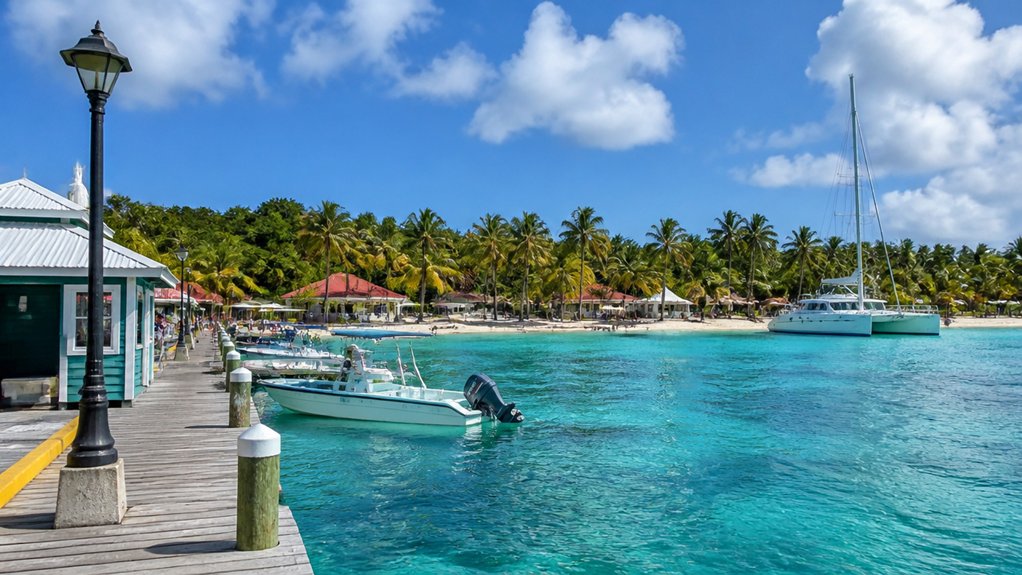
Beyond the water it is a beach day — pale sand, palms, loungers, and a barbecue lunch usually laid on by the ship. That is not a criticism. On a good day it is exactly what people want from a Caribbean stop.
History and What the Island Actually Is
Isla Catalina has no settlement and therefore no town history to walk around, but it is not without a past. It sat on the routes used through the Caribbean in the colonial and piracy era, and it has been a protected area for decades, which is why it still has reef worth swimming over.
Its modern role is straightforward: it is a day-use island for cruise passengers and for boat trips out of Bayahibe and La Romana on the mainland. The protection is real — visitor numbers and activities are controlled, which is precisely why the snorkelling holds up.
One thing worth clearing up. This is not Santa Catalina Island off California, the one with the town of Avalon on it. Same name, different hemisphere. If a guide mentions Avalon, casinos or a mainland ferry from Long Beach, it is describing the wrong island.
Shore Excursion or Going It Alone
Here the usual advice does not apply. There is no independent option, because there is no independent anything — no local operators waiting at a gate, no taxis to negotiate with, no town to walk into.
What that means in practice: if you want to snorkel the reef, dive The Wall, or go out on a boat, book it through the ship. If you simply want a beach day, you need nothing at all — walk off the tender, find a spot, and swim.
The genuinely free option here is the best one for a lot of people: the sea costs nothing.
What to Bring
Because there is no town, there is no chemist, no supermarket and no cash machine. Bring what you need.
Reef-safe sun cream, and more than you think. There is limited natural shade and the reflection off pale sand is fierce.
Water from the ship, plus something to keep it cool.
Your own snorkel and mask if you own them. Hire is available but a mask that fits your face is worth carrying.
Water shoes. Useful getting in and out over reef and rock.
A small amount of cash for any artisan sellers who set up near the landing area, though card is not reliable and there is nothing you must buy.
What Most Catalina Island Dominican Republic Guides Get Wrong
Take an early tender. The shaded spots and the loungers nearest the water go first, and the reef is calmer and clearer before the whole ship is in it.
Swim before lunch, not after. The water is quietest in the first two hours ashore.
The far ends of the beach empty out. Walk five minutes from the landing area and the crowd thins noticeably.
Do not count on signal. There is no public wifi and mobile coverage is patchy. Tell people at home you will be off grid for the day.
Watch the tender queue at the end. Everyone leaves at once. Either go back early or accept a wait in the sun.
Your Port Day: A Sample Itinerary
Assuming a morning arrival and most of the day ashore:
First tender: get ashore early, claim a spot, and get in the water while it is clear and quiet.
Mid-morning: snorkel the reef, or take the booked boat trip if you have one.
Lunch: whatever the ship has laid on, usually a barbecue near the landing area.
Early afternoon: walk the beach away from the crowd, or simply doze under a palm. This is not a port that rewards rushing about.
Before the last tender: rinse off, and head back with a margin rather than joining the final scramble.
Isla Catalina is a simple day and it is honest about it. Take it as a swim, a snorkel and a sit down in the sun, and it is one of the better beach stops in the Caribbean.
Book your Catalina Island Dominican Republic day
Tours for this port, compare before you book
Getting around in port