Larnaca Cruise Port Guide
Discover how to escape Larnaca’s cruise terminal and unlock authentic local experiences—but first, you’ll need to know…
In this guide
Try one free personalised day plan — built around your ship’s actual arrival and departure times. Then get every port on your cruise done the same way from £7.99 (about $10).
Cruise Port Overview: What To Expect
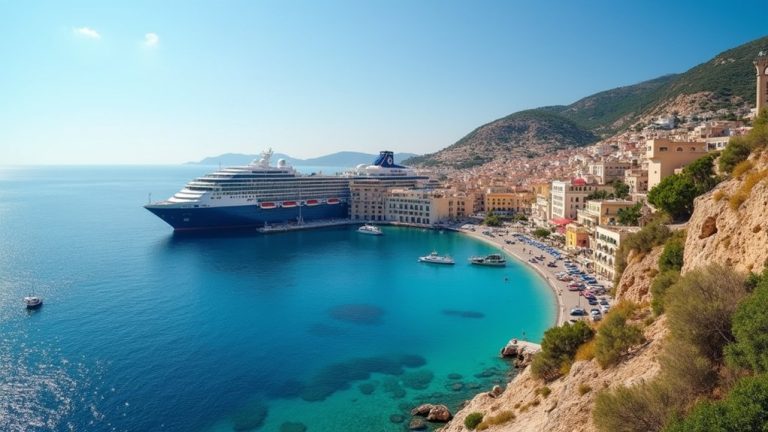
Larnaca’s harbour operates without the manufactured tourist machinery you’ll encounter at Rhodes or Crete. The compact layout means you can walk to proper local restaurants and actual neighbourhood cafés within reasonable distance, rather than being directed toward designated visitor zones.
The cruise terminal itself is straightforward and functional, with the town centre sitting just beyond it. Because cruise traffic doesn’t overwhelm Larnaca, you can move through it at your own pace without fighting crowds for basic sightseeing.
The seafront promenade works as a genuine working harbour rather than pure theatre, with palms and decent light. If you head away from the terminal early, you’ll find local coffee bars instead of the reheated variety sold near the ships. Staying connected during your explorations is easy with local eSIM data plans that eliminate expensive roaming charges.
The archaeological museum and salt lake are both possible half-day trips, but getting to them through official port taxis costs more than it warrants. Booking independent guided tours online beforehand—whether focused on the Troodos Mountains, the Akamas Peninsula, or combinations including the salt lake—will cost significantly less than the ship’s equivalent tours and allows you genuine flexibility. During peak season these tours book up quickly, so arrange yours before departure.
Getting From the Port To Town
The walk from the terminal into Larnaca takes roughly fifteen to twenty minutes, so you can reach the town centre on foot without paying for transport. Most cruise passengers queue for taxis outside the terminal building and accept inflated fares without realising the harbour is genuinely walkable. Head left from the terminal exit and follow the seafront promenade—it’s flat, signed, and gets you into the real town where prices for coffee or lunch drop noticeably.
If you’re travelling with luggage or elderly family members, the official port taxis are reliable but cost considerably more than they should. A more sensible approach is arranging a private driver through independent booking sites before you arrive. You’ll pay a fraction of the price, have transport sorted without port-side haggling, and gain the option of extending your journey beyond town if you’ve booked a half-day excursion to the salt lake or Troodos Mountains.
The local bus network exists but isn’t intuitive for cruise passengers with limited time ashore. Rental cars and scooters sit unused by most visitors who assume the port keeps everything within walking distance—it doesn’t. If you want to see anything beyond the immediate seafront, booking a guided tour online before departure works out cheaper than taxis and gives you actual expertise rather than a driver following sat-nav directions.
The Must-Do Experience: Start Here
Skip the seafront cafe photos—go there while other passengers are still sorting out ground transport. You’ll see what locals actually do: families with coffee, people fixing fishing nets, and the promenade without a crowd around you.
The Church of Saint Lazarus sits near the water and takes roughly an hour inside. The space has genuine character, and cruise groups don’t overwhelm it early in the day. Walk east along the promenade afterwards, where the tourist restaurants thin out and both prices and quality improve once you’re away from the immediate seafront.
Booking a local walking tour of the old town before arrival saves you from pointless wandering and actually gives you context about Cyprus rather than just visual landmarks. Tour guides fill up quickly when cruise ships dock, and they cost less than what your ship charges. You’ll finish by lunchtime with the afternoon free to either explore at your own speed or travel further out.
History Culture and the Top Sights
Larnaca’s layers of history compete for attention, but the practical reality is that most sights sit within walking distance of the port—you’re simply sharing that space with whoever else is docking that day. The Church of Saint Lazarus genuinely matters as a functioning religious site rather than a roped-off archaeological curiosity, and it’s worth seeing for that reason alone. The medieval fort and archaeological museum exist more as filler than as experiences that justify the effort if you’re pressed for time.
The real value in understanding Larnaca comes from grasping why the city shifted from major trading hub to quiet backwater to suddenly relevant again after 1974. That pivot—between what Cyprus was and what it became, between tourism infrastructure and actual daily life—is the genuine story, and no museum display will explain it to you.
A walking tour led by someone local transforms a port visit from checking boxes to actually understanding how a place functions. Independent guides cost considerably less than ship excursions and speak from actual knowledge rather than memorised patter, though the decent ones fill their slots well ahead of time when multiple ships are in port. Book online before arrival rather than hoping to find space on the day, and you’ll learn what happened to the Ottoman quarter, why certain streets matter to residents, and where locals actually buy coffee instead of paying seafront prices. Everything else—the forts, the museums, the archaeological fragments—becomes optional rather than your entire morning.
Beyond the Centre: Day Trips and Alternatives
Most cruise passengers stay on the seafront promenade, so the actual neighbourhoods where Larnacans live their daily lives sit just inland with considerably lower prices. You’ll see how the city functions beyond its tourism infrastructure, which means better food costs, genuine local commerce, and spaces designed for residents rather than visitors.
The salt lakes west of the city work well for birdwatchers and photographers, especially outside summer when light conditions improve and you won’t face competition from tour groups. The Hala Sultan Tekke mosque compound nearby has legitimate historical significance without the queues that accumulate at the port-area churches, and reaching it costs far less than the inflated ship excursion packages for identical access.
Kiti village maintains an agricultural cycle that operates independently from cruise tourism, with a functioning Byzantine church and kafeneia where coffee prices reflect local economics rather than harbour markups. You need your own transport to make the trip worthwhile since public buses don’t align with cruise schedules, but this constraint actually works in your favour by filtering out the photograph-collection tourists.
The coastal route toward Paphos makes sense only if you allocate several hours, which defeats the point of a port day. Better to choose one direction and explore it properly—either work through Larnaca’s neighbourhoods with someone who lives there, or spend a focused morning at the salt lakes followed by lunch in Kiti. Attempting both guarantees you’ll rush through each, and rushing means missing why either location operates differently from what you experience at the terminals.
Shore Excursion or Going It Alone
Ship tours cost twice what independent guides charge for identical routes, so you’re paying extra purely for convenience in a port where you don’t need it. Your actual choice is whether you want any guide at all, and most visitors get more from a focused morning in one neighbourhood with a local than from any packaged group tour.
The ship bundles you with dozens of other passengers onto a coach that runs on a fixed schedule designed for efficiency rather than genuine exploration. You’ll waste time waiting for stragglers and listening to scripted commentary that repeats what any guidebook already tells you. Independent local guides work at your pace, answer real questions about what you’re actually seeing, and take you somewhere without crowds.
Going solo works if you can navigate maps and aren’t bothered by unfamiliar streets. The salt lakes and Kiti village sit deliberately away from the terminal, so you’ll need your own transport, but hiring a driver for several hours costs well below what the ship charges and you can linger wherever interests you. Professional drivers ensure reliable transportation while you explore at your own pace. Walking inland past the port area’s inflated food and drink prices takes only a short walk and covers your transport costs outright.
An independent guide for Kiti and the lakes splits the difference—you gain local knowledge without group logistics, and they provide their own transport. During cruise season these guides book up fast, so reserving online in advance secures your preferred option and better rates.
The Mistakes Cruise Passengers Make in Larnaca
The WiFi at the cruise terminal drops off sharply once you leave the departure lounge, so load your offline maps before disembarking. The strip of restaurants and cafés immediately around the terminal exists primarily to charge cruise passengers inflated prices—a coffee costs roughly double what you’d pay in an ordinary neighbourhood spot. Some of the sights worth your time (the salt lakes and the church at Kiti) sit beyond easy walking distance, which forces most cruise passengers into an awkward choice between paying premium rates for a ship excursion or wrestling with taxis at the rank.
Booking an independent local guide in advance gives you a genuine edge. They’ll filter out the sights that photograph well but offer little substance, and steer you toward places worth an hour of actual attention. They also know the cafés where locals eat rather than where terminal operators direct cruise passengers, cutting through the terminal’s price markup entirely.
Confirm your guide’s pickup location before you leave the ship and save it to your phone’s map app. Guides typically wait at a specific spot near the terminal rather than searching through crowds on the dock. If you’re going without a guide, download the local transport app and check the routes to Kiti village before you dock, since seasonal schedules change and you won’t want to squander your few hours on transport delays. The walk from the terminal back toward the town centre takes you through residential streets where prices settle to normal levels and you actually see how the place functions.
Your Port Day: A Sample Itinerary
Most cruise passengers queue at the terminal café while the salt lakes—Larnaca’s actual reason to visit—remain nearly empty during the morning hours when light and temperature favour walking. You’ll see flamingos if conditions align, or at least understand why they should be there. The walk around the perimeter takes longer than you’d expect but rewards attention.
Skip the departure lounge and head directly to the local transport rank instead. A service will get you to the salt lakes before other visitors finish their overpriced coffee at the dock. The water reflects the sky properly in morning light, which is the only reason to come early.
From there, catch a service into the old town and eat where locals eat rather than near the terminal. Neighbourhood restaurants beyond the main tourist strip serve decent mezze at prices that make sense, and you’ll taste what the place actually offers instead of what the cruise industry packages for you. This matters more than it sounds.
Your afternoon depends on two variables: ship departure time and your tolerance for walking. If you have several hours and energy remaining, arrange an independent guide in advance to visit the Angeloktisti church at Kiti, which carries genuine historical substance and operates outside the standard cruise-day rotation. If time or energy is short, the seafront promenade serves as a legitimate walk where you can move off lunch, watch the working harbour, and see the town functioning as something other than a service station for ships.
Return to the terminal well before your departure time because transport reliability varies. Arriving flustered wastes the entire point of planning ahead.
Book your Larnaca day
Tours for this port, compare before you book
Getting around in port