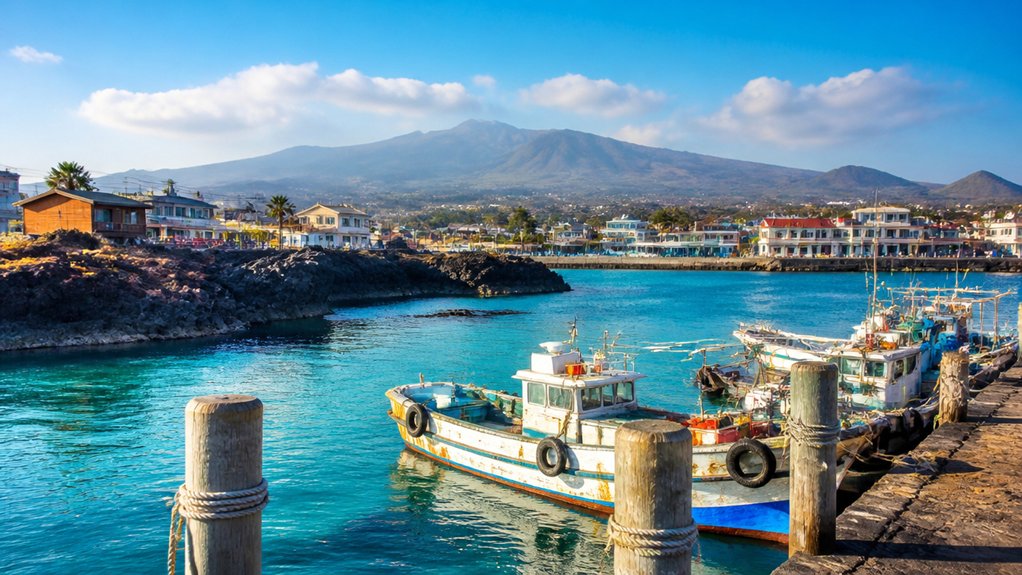
Jeju Cruise Port Guide
Must-know insider secrets to maximize your Jeju cruise port day—discover what the terminal won’t tell you.
In this guide
Try one free personalised day plan — built around your ship’s actual arrival and departure times. Then get every port on your cruise done the same way from £7.99 (about $10).
Cruise Port Overview: What To Expect
The cruise terminal sits at Jeju Port in Jeju City on the north coast, or at Gangjeong on the south coast near Seogwipo for some ships, and which one you get dictates how you’ll spend your day ashore. The port itself is functional rather than interesting—duty-free shops and overpriced cafés exist here, but little else worth your time. The terminal design is efficient and modern, which means you’ll move through quickly, but this speed works against you by pushing you directly toward tour operators charging substantially more than what you’d pay booking independently.
Your time ashore ranges from several hours to roughly a full morning or afternoon, so you need a concrete plan before the ship docks. Booking a tour at the terminal desk feels convenient but costs more and limits your options—the better independent operators book up fast with cruise passengers, so arrange something online weeks ahead of your departure date. This approach gives you both lower costs and genuine control over what you actually do.
The terminal is small and taxis consistently wait outside. Few staff speak English fluently, so download an offline translation app beforehand to avoid communication problems later. The port area itself has expanded over recent years, but it remains a working harbour rather than a tourist zone, so treat the terminal as merely your exit point. The actual experience of Jeju begins once you leave the terminal building and head inland, where the island’s substance becomes apparent.
Getting From the Port To Town
The taxi queue moves steadily, getting you inland quickly, but most drivers speak minimal English so write down your destination or have it ready on your phone. Ride-sharing apps function here and typically undercut taxi fares, though you need data coverage and must wait while the driver finds you. Either option costs a moderate amount to reach central Jeju City or the main island attractions.
Taxis heading to town centre drop you near the main shopping district, which genuinely helps if you need lunch or supplies, but you’ll be surrounded by other cruise passengers with identical plans. Your actual alternative is booking a private driver or minibus in advance—these operators collect you directly from the terminal and charge substantially less than queuing at the port. During peak season these services book out weeks ahead, so arranging one online before arrival isn’t optional if you want better independent experiences. Consider arranging seamless transfers with professional drivers through established booking platforms to ensure reliable pickup and avoid terminal markups.
Avoid the terminal tour desk. Instead arrange your guide or driver through established platforms beforehand, which keeps you away from the premium markup cruise lines add. Your transport becomes functional rather than wasted time, which matters when you’re only ashore for a few hours.
The Must-Do Experience: Start Here
Jeju’s volcanic landscape works differently from other East Asian cruise ports—you get black lava fields and crater lakes instead of the standard temple-and-beach formula, though those exist here too. Most cruise passengers never leave the controlled shopping zones near the terminal, which means the island’s actual character remains accessible once you step past the first hour ashore.
Head directly to Hallasan National Park or the Manjanggul Cave system, both of which you can reach if you arrange transport before arriving. These locations matter because they show you what Jeju actually is geologically and visually, rather than what cruise marketing wants you to see. The caves benefit from early arrival since organized tour groups start flooding in during mid-morning, and you’ll want to move through before that happens.
Skip the cruise line’s packaged excursions. Book a private guide or small-group tour through independent platforms weeks before you arrive—these cost substantially less than what your cruise operator charges on top, and you’ll actually see the place instead of rotating between gift shops. The popular tours covering volcanic crater walks and black sand beaches fill up during busy seasons, so securing your spot in advance matters more than being cautious.
If you’re limited to activities near town, the Jeju Haenyeo cultural performances give you genuine context about island traditions without the contrived tourist experience most ports offer. Eating lunch afterwards at family-run restaurants away from the waterfront strip costs considerably less and serves better food than the places targeting cruise passengers.
History Culture and the Top Sights
Jeju’s geology matters more than its history—the island was shaped by volcanic forces long before the Tamna kingdom or later Mongol rule, and understanding that geological story actually explains why the place functions as it does.
The Haenyeo divers are the only part of island culture worth your time during a port call. These women have been freediving without equipment for centuries, and their practice represents genuine local tradition rather than performance for tourists. Rather than watching staged shows at commercial venues, find the actual diving cooperatives on the eastern and western coasts where you can observe real work for a modest fee instead of actors performing for cruise passengers.
Temple sites and historical buildings exist across the island but they’re interchangeable with dozens of other ports you might visit. If cultural exploration appeals to you, booking a local guide independently costs considerably less than cruise-arranged tours and lets you stay longer at places that genuinely interest you rather than following a fixed schedule. Most pre-arranged ship tours cram forty people into minibuses and waste half the time waiting for the slowest members of the group.
Your time here works better when you focus on what actually distinguishes Jeju—the haenyeo tradition and the volcanic landscape that enabled it. Everything else is pleasant enough but essentially replaceable.
Beyond the Centre: Day Trips and Alternatives
The volcanic landscape extends well beyond cruise ship itineraries, and how you spend your time depends on whether you want to cover ground quickly or actually grasp what’s happening geologically. The western and eastern coasts operate as fundamentally different environments, so your choice should reflect what genuinely interests you rather than whatever your ship’s excursion desk recommends. If you’re interested in the haenyeo tradition, the eastern cooperatives around Gujwa give you access to working divers—this means arranging your own transport, but you’ll see the actual practice rather than a performance designed for tourists.
The western coast draws you toward volcanic formations with fewer crowds, though organising transport yourself is necessary. Ship-arranged tours charge substantially more than booking independently online beforehand, and established local guides book out weeks ahead during busy periods. The real advantage of booking your own guide is control over pacing—you can spend as long as you need at something that interests you instead of moving through locations on a fixed schedule.
A knowledgeable guide genuinely improves your understanding of the volcanic geology shaping what you’re seeing, though budget-conscious travellers can navigate with maps if they’re comfortable doing so. Your port time functions better when you commit to exploring one coast rather than attempting both in a single day. Pick your direction, book your transport or guide in advance online, and move through locations methodically rather than rushing—this way you’ll actually retain something specific about Jeju instead of just remembering that you were hot and hurried.
Shore Excursion or Going It Alone
Ship excursions cost roughly double what you’d arrange yourself, and you’ll spend half your port time standing in a queue with dozens of other passengers rather than actually seeing anything. What you get for that premium is logistics handled for you, no risk of missing the ship, and someone else managing the language problem. Most cruise passengers find this convenience doesn’t justify the extra expense or the crowds.
Going it alone means doing your homework before you arrive. Book a private guide or established tour operator online in advance—the decent ones fill quickly when cruise ships are in port, and you’ll pay considerably less than the ship quotes while controlling your own schedule. Local taxis and shuttles cost a fraction of what the excursion desk charges, though you’ll need to manage basic navigation and accept that language gaps might slow you down occasionally. The real benefit is doing things at your own pace—you can stand at a volcanic formation as long as you want, skip attractions that don’t appeal to you, and eat lunch where the locals actually go instead of at tourist restaurants near the terminal.
Ship excursions are worth considering if independent travel seems too stressful for your situation or confidence level. Book early, confirm your departure time the night before, and understand you’re paying for certainty rather than value. Your best option is arranging a guide through an established local booking platform beforehand. You’ll get personal attention, proper pacing, and enough savings to spend on things that actually matter to you—fresh sashimi at a working fishing harbour instead of the standard tourist menu.
What Most Jeju Guides Get Wrong
The terminal area operates on economics that punish time-limited visitors, so prices spike the moment staff clock you as someone leaving in a few hours. Mediocre meals and generic souvenirs cost considerably more within view of the port, whereas the actual town starts a short journey away by local transport where restaurants serve proper food, markets function normally, and costs won’t sting. Your money stretches further once you leave the terminal precinct behind.
Volcanic craters draw the real interest on Jeju, but the accessible ones fill with tour groups during peak season when multiple ships dock simultaneously. Booking a guide independently before arrival matters more than hoping to arrange transport from the port, and timing your visit early or late helps you avoid the midday crowds that choke popular sites. Consider exploring guided excursions offered through reputable operators to ensure quality experiences beyond the standard port offerings. Online booking beats the gamble of arranging things on the spot.
Language rarely causes genuine problems since major sites have English signage and taxi drivers manage translation apps adequately. Weather presents the actual challenge—Jeju produces sudden rain and wind without warning, so check the forecast before heading out and dress in layers rather than gambling on clear skies. Planning around conditions beats assuming good weather throughout your day.
Food, not shopping, determines whether your port day works out well. Eat fresh seafood at working harbours and try the local black pork instead of tourist restaurants that extract money without delivering taste. Your lunch actually satisfies you and costs less when you skip the places designed for cruise passengers.
Your Port Day: A Sample Itinerary
Most cruise passengers spend their first hour in the terminal buying overpriced coffee, which gives everyone else who leaves immediately a genuine head start. Your day works better if you move through the port quickly and reach the actual island while other visitors are still stuck with mediocre breakfast choices.
Take local transport directly to Hallim Park on the western side of the island, where you’ll see volcanic formations without the crowds that swamp Seonggeup Folk Village and the main crater during peak ship hours. You get real geological interest and space to breathe before the midday rush arrives. The transport costs less than a ship excursion and you control when you come and go.
By early afternoon, reach Gujwa Haenyeo diving village on the eastern coast where women divers still work the waters as they have for generations. Eat lunch at one of the family restaurants overlooking the harbour and order what the locals are eating, which means fresh seafood without the tourist markup. This is where your money actually becomes good value.
Spend your final hours in the neighbourhood around Dongmun Market in the town centre, walking through stalls selling dried seaweed, local honey, and actual regional goods. You’ll find things people actually use rather than the generic cruise-port souvenirs, and the prices match what residents pay rather than what ships can extract from time-pressured visitors. Head back to the port with time to spare and you’ll have moved faster and eaten better than anyone who stayed near the terminal.
Book your Jeju day
Tours for this port, compare before you book
Getting around in port
✈️ Before you sail: eSIM, insurance, luggage, flight delays
Ships In Jeju
Upcoming calls from our sailings tracker, updated regularly.
Carnival Luminosa
CarnivalWed 14 Oct
⚓ 08:00–17:00
Navigator Of The Seas
Royal CaribbeanWed 21 Oct
⚓ 07:00–19:00
ms Westerdam
Holland AmericaMon 2 Nov
⚓ 12:00–18:00
Spectrum Of The Seas
Royal CaribbeanMon 2 Nov
⚓ 11:59–20:00
ms Westerdam
Holland AmericaMon 16 Nov
⚓ 08:00–17:00
Norwegian Jade
Norwegian Cruise LineFri 20 Nov
⚓ 07:00–15:00