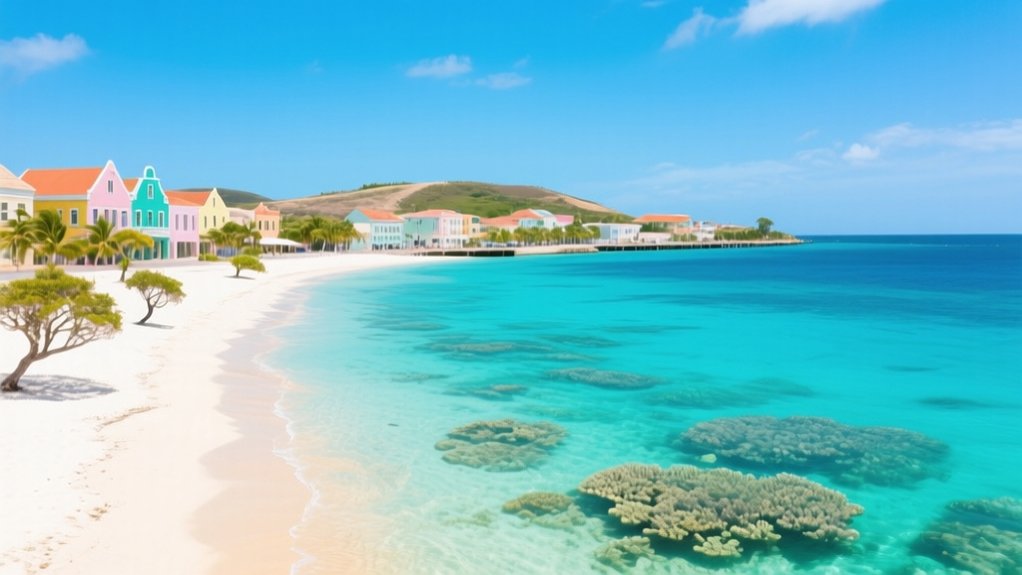
Bonaire Cruise Port Guide
Get insider tips on maximizing your Bonaire cruise port day through affordable snorkeling, local dining, and independent exploration—but what’s the one mistake most visitors make?
In this guide
Try one free personalised day plan — built around your ship’s actual arrival and departure times. Then get every port on your cruise done the same way from £7.99 (about $10).
Cruise Port Overview: What to Expect
Bonaire’s cruise port occupies a compact downtown zone that’s easy to navigate on foot, yet the island’s actual attractions sit underwater and beyond the immediate waterfront. Ship excursions downplay this because they cater to passengers who require transport and guidance, but what matters is understanding that Bonaire has no natural beach at the port itself—your day ashore therefore hinges on either advance planning or accepting premium tour prices that would cost substantially less if arranged independently.
The terminal itself is small and relatively quiet, where you’ll disembark into basic facilities and find tourist information desks that tend to recommend expensive options. Walking into Kralendijk’s town centre is straightforward, and you’ll encounter shops, restaurants, and dive operators along the waterfront. This moment is where your choices diverge: booking through the ship, gambling on last-minute arrangements onshore, or arriving with independent bookings already confirmed.
Your flexibility and whether you intend to dive or snorkel makes a genuine difference. Bonaire holds a reputation for shore-accessible reef diving, but if you’re not a diver, reaching decent beaches and proper snorkelling requires a boat. This isn’t something you can realistically improvise upon arrival, so book water-based activities through independent operators beforehand—the reputable ones have limited capacity and consistently undercut ship prices, which frees up your time to explore Kralendijk’s quieter streets and eat at local restaurants without pressure. You can explore guided excursions at independent operators to compare options and secure the best rates for your specific interests.
Getting From the Port to Town
Bonaire’s port is close enough to walk into Kralendijk, which tricks you into thinking everything is nearby—it isn’t. The walk from your ship to town centre crosses the small cruise terminal, follows the waterfront road, and cuts inland through a grid of streets. You won’t need a map, and the route is safe and well-lit even early in the morning.
Most cruise passengers take the first taxi they see, which charges more than the journey warrants for a distance you can cover on foot. Walking lets you observe the actual rhythm of the island and keeps money in your pocket for food and activities that matter. If you’re carrying diving equipment or have mobility issues, a taxi makes sense—taxis wait at the pier and charge fixed rates per destination, so ask the fare before you set off.
The transport decision that actually matters comes after you reach town. If your pre-booked snorkelling or diving operator hasn’t arranged pickup, they typically offer free or cheap collection from the port or town centre—confirm this when you book. For exploring Kralendijk’s restaurants and shops on your own, walking is all you need.
Most passengers waste time in the terminal area or jump straight into an expensive tour. Walk directly into town instead, find your operator’s meeting point if you have one, and use whatever time remains to eat and wander at ground level where prices reflect what locals actually pay.
The Must-Do Experience: Start Here
Bonaire exists for the water. Your time here works only if you commit to either snorkelling or diving, because the reef begins within metres of the shore and everything worth doing happens underwater. The cruise line will charge you significantly more than independent operators for access to the same sites, then herd you around in a group while you waste time on a boat.
Book a snorkelling or diving operator before you leave port. Independent outfits price competitively with the cruise line, collect you directly from the dock or town centre without markup, and run smaller groups with schedules that actually flex around your needs. During heavy cruise days the decent operators fill their boats early, so locking in your booking weeks ahead means you won’t spend your morning on the dock negotiating with vendors or joining whatever random group still has space.
If diving or snorkelling hold no appeal, skip the coach tours that ferry cruise passengers around pointing at scenery. Walk the waterfront instead, eat at places where local people actually sit down, and consider the underwater snorkel trail if you can swim reasonably well and want to save money. Kralendijk’s actual character lives in its restaurants and streets, not in a bus with fifty other tourists. Accept that Bonaire rewards single-minded focus—commit fully to the water in whatever form suits you, or spend your day in town, but don’t expect to do both properly in one port visit.
🗺️ Tours & Experiences at This Port
Skip the ship’s overpriced excursions — browse top-rated independent tours trusted by thousands of cruise passengers.
History Culture and the Top Sights
Bonaire’s history stays largely absent from cruise-ship itineraries, which means the cultural sites remain relatively quiet. The island passed between Dutch, Spanish, and British control multiple times, and this layered past sits scattered across Kralendijk rather than confined to a single museum behind an admission desk. Washington Slagbaai National Park, a nature reserve covering the north of the island, is about wildlife rather than colonial architecture, and the old slave huts on the southern shore stand as direct evidence of the island’s economic history—they’re preserved structures, not polished attractions, so you draw your own meaning without narration.
The real character of Bonaire emerges once you step away from the waterfront commercial strip. Eat where locals sit; the food costs considerably less than cruise-line pricing and actually reflects what matters to people here rather than a version constructed for tourists. The Bonaire Museum near the harbour is straightforward and useful if you want historical context before exploring further, though it’s genuinely optional depending on your priorities.
Organised coach tours selling island highlights charge heavily for a generic experience. Walk the waterfront yourself, find a local restaurant for lunch, then decide whether to spend your afternoon snorkelling or simply watching how the light moves across the water. Bonaire doesn’t stage itself for visitors—it simply functions as a place where people live, and that absence of performance is why it actually works.
Beyond the Centre: Day Trips and Alternatives
Most cruise excursions to Bonaire’s dive sites operate on schedules built around getting you back to the ship rather than maximising your actual water time. If diving or serious snorkelling matters to you, booking an independent operator in advance gives you genuine flexibility and often costs substantially less than what the ship charges for the same experience.
The island’s best reef access sits directly from the shore, which means you don’t need a boat for decent snorkelling. Walk to any public beach south of Kralendijk, rent gear locally, and enter the water where locals do. You’ll see brain coral, parrotfish, and the occasional sea turtle without paying premium prices or waiting for a group to assemble.
This approach works especially well if your port time runs only a few hours, since you stay close to the ship and avoid the logistics of organised transport altogether. Shore-based snorkelling lets you control your own pace and leave whenever you choose rather than when the group leader decides it’s time to board the boat.
If you want to venture beyond the immediate waterfront, hiring a local taxi driver for a few hours costs considerably less than a coach tour and gives you freedom to stop where you actually want to linger rather than where a script dictates. They’ll take you to the slave huts, Washington Park, or quieter northern beaches depending on your interests, then return you to the port on schedule. Book this arrangement through your accommodation or ask the harbour staff directly rather than relying on ship recommendations, since the difference in price and autonomy makes the small effort of arranging it yourself genuinely worthwhile.
Shore Excursion or Going It Alone
The ship’s excursion desk will present organised tours as your safest option, but Bonaire’s modest size and excellent signage mean going it alone is genuinely simpler than cruise staff imply. Most passengers book unnecessarily complicated group experiences when the island actively welcomes independent exploration.
The real distinction isn’t between guided and unguided—it’s between paying for convenience you don’t need and keeping your money. Shore excursions bundle transport, a guide, and group accountability into one package priced for that bundling. If you’re comfortable maneuvering independently, you’re simply removing middlemen, not taking a risk. Bonaire has no language barrier for English speakers, taxis wait visibly at the port, and restaurants clearly mark their prices. The infrastructure actually supports casual visitors.
What matters more is being honest about your constraints. Short port time means you should skip any excursion and snorkel from the nearby beach instead—you’ll spend less time travelling than a group tour requires just to assemble. Longer port time? Hire a taxi driver for a half-day rate considerably less than a coach tour charges, then pocket the difference or spend it on a proper lunch with a view. Neither approach requires advance booking in the traditional sense; both reward you for bypassing the cruise desk entirely.
The one genuine advantage the ship offers is that they handle logistics if something goes wrong during your excursion—a practical safeguard some passengers genuinely value. If that peace of mind matters to you, book it. If it doesn’t, the island functions perfectly well without it, and your bank account will reflect the difference.
🗺️ Tours & Experiences at This Port
Skip the ship’s overpriced excursions — browse top-rated independent tours trusted by thousands of cruise passengers.
The Practical Details That Change Your Day in Bonaire
Bonaire’s taxi drivers actually know the island and won’t recycle the scripted patter you’d get on a coach tour, but they’ll drive you around aimlessly if you haven’t worked out what you want to do beforehand. Spend ten minutes on your phone before leaving the ship figuring out what actually interests you, because wandering around undecided wastes both port time and your money on fuel. “I’ll figure it out when I get there” is a luxury you can’t afford with limited hours ashore.
The shops and restaurants near the port deliberately set their prices and menus for cruise passengers, and you’ll pay considerably more there than you would inland. Ask your taxi driver where he eats instead of trusting the laminated cards the terminal staff hand out—he knows which places charge residents’ prices rather than visitor markups because he’s a regular himself.
Snorkelling directly from the beach near the port is genuinely good and costs you nothing beyond getting there, yet most passengers book expensive boat tours instead. If you’re a confident swimmer and conditions are reasonable, you’re paying extra for convenience you don’t actually need; if you’re less certain in the water or want someone explaining what you’re seeing, independent snorkel tours arranged online beforehand tend to cost less than what the ship charges and usually work with smaller groups that get more attention.
The port area empties out during the mid-afternoon hours when cruise ships are back out at sea, so any vendor telling you that you must buy or visit something immediately or you’ll miss your chance is simply making up urgency. You have more time than they’re suggesting—use it properly instead of rushing around panicked.
🗺️ Tours & Experiences at This Port
Skip the ship’s overpriced excursions — browse top-rated independent tours trusted by thousands of cruise passengers.
Your Port Day: A Sample Itinerary
Bonaire works best when you break your port day into stages rather than trying to pack everything into a single rush. Take the water taxi from the Kralendijk waterfront across to Klein Bonaire, or a taxi to one of the leeward beach snorkel sites along the west coast, and get into the water early when visibility is best and you’re not yet tired. Bring your own snorkel gear if you have it, otherwise rent locally—the house reef delivers more marine life in a couple of hours than most organised tours actually provide.
By midday, eat at a proper restaurant away from the waterfront. Ask your taxi driver where he’d take his family to eat, and you’ll find yourself at a small place in Kralendijk town paying considerably less than the tourist-facing establishments near the port. This separates you from the cruise crowds and means you’re eating on actual local terms rather than racing against a ship schedule.
Your afternoon is genuinely open because you’ve already done what the island offers best. You can walk the town, visit the small museum if it appeals to you, or simply sit somewhere with a drink and watch the water without any pressure to be somewhere. Taxis are available whenever you need one, so you can return to the ship at your own pace, having actually experienced the place rather than ticked off a predetermined list.
If you prefer a guide to a map, what is available in Bonaire covers trips that fit a single day ashore in Bonaire.
🗺️ Tours & Experiences at This Port
Skip the ship’s overpriced excursions — browse top-rated independent tours trusted by thousands of cruise passengers.
Book your Bonaire day
Tours for this port, compare before you book
Getting around in port