Rhodes Cruise Port Guide
The ultimate Rhodes cruise port guide reveals insider secrets to maximize your limited shore time—discover what you’re missing.
In this guide
Try one free personalised day plan — built around your ship’s actual arrival and departure times. Then get every port on your cruise done the same way from £7.99 (about $10).
Cruise Port Overview: What to Expect
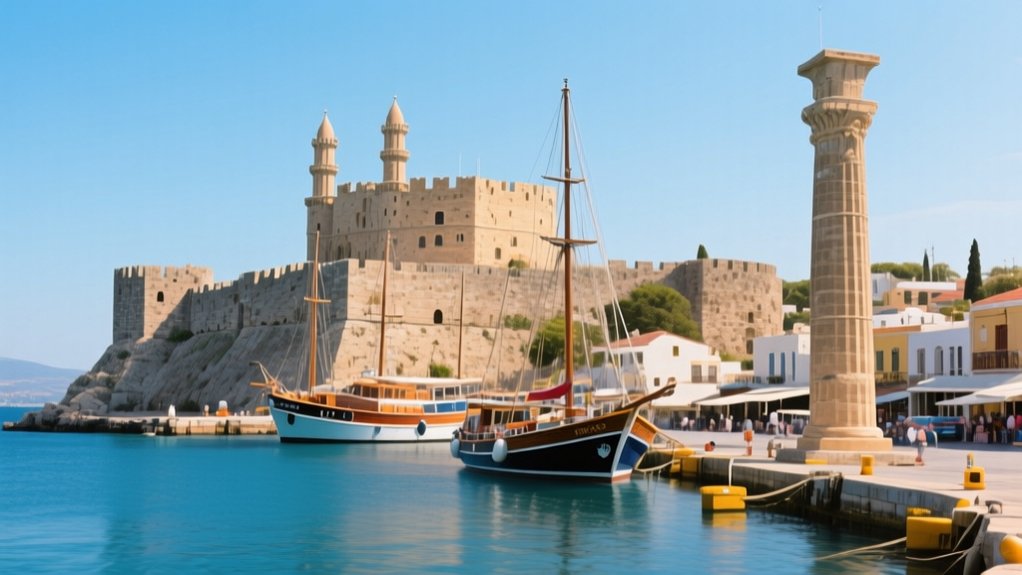
Rhodes’ cruise port has an easy geography that surprises most passengers: your ship docks right under the city walls, which means the medieval Old Town—the actual reason you’ve come—sits a short walk of about five minutes from the pier. There’s no need for a taxi or shuttle, so you really can step off the ship and straight into history.
The port itself is functional rather than charming. You’ll find duty-free shops, cafés charging tourist prices, and tour operators with laminated photographs. The waterfront is busy on cruise days, which is precisely when you’re there, so don’t expect solitude.
Port facilities are well-organised though—toilets work, signage is clear, and you won’t struggle to find your way around. What matters is what lies beyond the immediate port area. The Old Town’s medieval walls and winding streets are worth your time, but they’re also genuinely crowded.
Morning visits mean fewer people jostling for space and better light for photographs. Independent walking tours booked in advance typically cost considerably less than ship excursions and give you more flexibility with your schedule. Popular operators fill quickly during peak season, so book ahead to secure a spot. Consider arranging professional drivers for seamless transfers between the port and Old Town attractions.
The real advantage of Rhodes isn’t the port infrastructure; it’s that you’re actually visiting somewhere with real history and character, not a manufactured tourist zone. You just need to be tactical about timing and transport to make the most of it.
Getting From the Port to Town
Taxi drivers at the port rank know your ship’s schedule down to the minute, and they price accordingly. Negotiating a fare in advance works better than using the meter, though either option costs more than the journey warrants. For the Old Town itself you don’t need a taxi at all, as the gates are a few minutes’ walk from the pier.
Booking a transfer online before you arrive removes the negotiation entirely and puts you with a driver who understands how cruise schedules work. You’ll typically pay less than haggling at the rank would cost you, and the whole process takes about ten minutes to arrange. This approach eliminates the friction of port-side transactions and gets you moving faster.
The local buses run to the Old Town with reasonable frequency if you want a cheaper alternative. You’ll share the ride with residents rather than tour groups, which gives you a different perspective on how people actually move around. The buses aren’t difficult to navigate, and drivers expect confused cruise passengers asking for help.
Shore time evaporates quickly the longer you stay at the port, so decide on your transport method and commit to it. The Old Town’s streets wind around considerably and take a solid block of continuous time to explore properly. You won’t see much if you spend half your day sorting out how to get there.
The Must-Do Experience: Start Here
The Old Town‘s medieval streets are narrow, steep, and built without any thought to managing crowds. You’ll need several hours to walk through properly, which means leaving the port straight away rather than wasting time on breakfast.
Start at the Palace of the Grand Masters because it’s the obvious reason to climb uphill and substantial enough to justify the walk. Book a guided tour in advance through an independent operator rather than joining the queue with other cruise passengers—independent operators fill slots faster but charge less than what the cruise lines charge for the same tour.
Work downhill through the Street of the Knights afterward, which is an actual medieval street that hasn’t been converted into a shopping arcade. The Jewish Quarter and Turkish Quarter branch off from here naturally, and moving between them shows you how the city actually works instead of feeling constructed for tourists.
Most cruise passengers run out of time before they run out of things to see, so focus on the palace and the street rather than trying to see everything. The harbour views from various points along the walk are free and better than most of the paid attractions. Eat lunch in a neighbourhood restaurant away from the tourist streets, where prices climb steeply without any improvement in the food.
🗺️ Tours & Experiences at This Port
Skip the ship’s overpriced excursions — browse top-rated independent tours trusted by thousands of cruise passengers.
History Culture and the Top Sights
Rhodes spent centuries as a crossroads between the Ottoman Empire and Christian Europe, which means the history you’ll encounter isn’t neat or unified—it’s genuinely complicated, and that’s what makes it worth your time.
The Palace of the Grand Masters dominates the narrative because it had to. Built by the Knights Hospitaller in the 14th century and then substantially rebuilt by the Italians in the late 1930s, it’s less a single building than a statement of power changing hands repeatedly. The interior mosaics and period rooms tell you far more about medieval military life than any guidebook could, particularly the scale of the kitchens and storage areas designed to withstand siege.
A guided tour beats wandering alone because you’ll understand why the knights positioned themselves here rather than simply admiring the stonework. The Street of the Knights below it remains largely intact from the medieval period, which means you’re walking through actual history rather than a reconstructed version. Each building housed a different national group of knights—French, Italian, Spanish—creating what amounts to a medieval diplomatic quarter compressed into one street.
The Archaeological Museum sits inside the Old Town, in the medieval Hospital of the Knights, and contains exceptional finds from across the Dodecanese islands, including some genuinely important Minoan and Classical pieces. The collections are moderate in size, but they provide essential context for understanding the island’s importance to ancient Mediterranean civilisations. You’ll get better value booking a private archaeology-focused tour through an independent operator than paying ship prices for the same experience.
Independent guides often have deeper knowledge and substantially lower costs than what the major tour operators charge. They also tend to have more flexible scheduling, which matters when you’re working around your ship’s departure time. These tours help you connect the disparate sites meaningfully rather than treating each location as a standalone checkpoint.
Beyond the Centre: Day Trips and Alternatives
The ship excursion to Lindos costs roughly double what you’d pay booking independently, yet you’ll spend half the day queuing with hundreds of other passengers at the Acropolis. It’s the clearest example of poor value Rhodes offers cruise travellers.
Going it alone is straightforward and considerably cheaper. Local transport gets you there in reasonable time, giving you genuine freedom to explore the whitewashed village at your own pace rather than herding through the site during a rigid window. The Acropolis itself—perched above the town with views across the Aegean—warrants the climb, but you’ll actually absorb what you’re looking at without a guide talking over the history on a megaphone.
Book an independent Lindos tour in advance rather than attempting this solo if archaeology matters to you. The best guides arrange access to lesser-known Byzantine churches and explain the village’s actual history—from medieval pirate stronghold to package holiday destination. These tours fill quickly for cruise passengers, and booking ahead online secures better availability and rates than negotiating with operators at the port.
The alternative is heading inland to the Valley of the Butterflies, where thousands of Jersey Tiger moths cluster in the trees during the right season. It’s quieter than Lindos, requires less scrambling up hillsides, and genuinely differs from standard Mediterranean sightseeing.
Starting early matters considerably. The later you leave the port, the less time you have ashore, and both destinations warrant proper time rather than rushed photography stops.
Shore Excursion or Going It Alone
The ship’s concierge will tell you the Old Town is closed on Sundays—it isn’t, which means you’ll have considerably fewer crowds if your Rhodes day happens to fall then. Most cruise passengers believe the misinformation and either skip the harbour entirely or rush through assuming shops are shut, leaving you with a genuinely peaceful morning wandering the medieval streets.
Start early regardless of day. The first two hours after you dock are golden, before the majority of passengers disembark and the narrow lanes become shoulder-to-shoulder shuffling. You’ll actually see the Ottoman fountain, the Street of the Knights, and the Palace of the Grand Masters without queuing for photographs.
Watch your spending near the cruise terminal. The restaurants within sight of the port entrance charge considerably more than places tucked into the neighbourhood proper. Walk inland and your coffee or lunch costs a fraction of the price for genuinely better food, as the locals know where they eat—follow them away from the waterfront.
Independent guides can be arranged through online platforms days before you arrive, which means you avoid the port-side touts entirely and secure someone who knows Rhodes properly rather than someone who knows the tourist script. Tours fill quickly for cruise passengers with limited time ashore, so booking ahead online isn’t optional—it’s the difference between a rushed afternoon and an actual understanding of what you’re looking at. Booking guided tours in advance ensures you maximize your time at this Mediterranean destination.
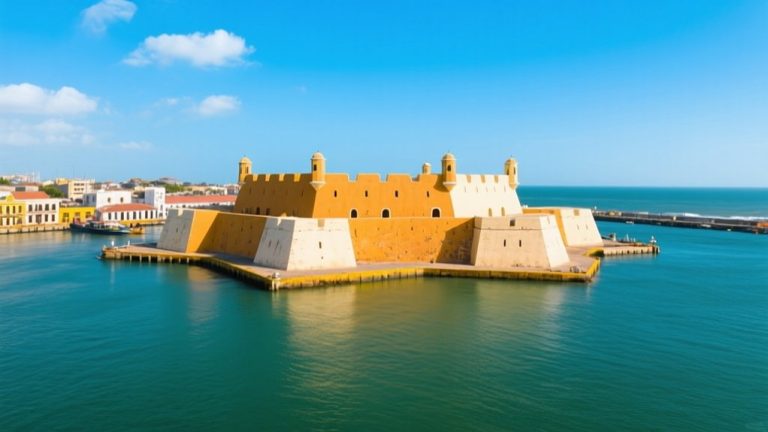
The harbour fortifications are free to walk, genuinely impressive, and often completely overlooked while everyone queues for the palace. Go there first and you’ll have the views to yourself and nowhere else to be.
Before You Leave the Ship: Rhodes Practicalities
The café at the cruise terminal charges roughly three times what you’ll pay for identical coffee two streets inland, which reveals how port economics work. Your ship’s excursion desk promotes organised tours because they earn commission—not because they’re your best option, and certainly not because they’re good value.
The locals have a saying about cruise days: the port fills with people who’ve paid thousands to get here but resent spending a few euros on a proper lunch. Walk past the initial tourist corridor and budget-friendly food exists everywhere in Rhodes. The tavernas where you see Greek families eating lunch serve better food for considerably less than what the harbour-front establishments charge.
Book any independent guide or tour through established online platforms several days before you arrive. The popular ones—particularly those focusing on Byzantine history or the Old Town’s quieter sections—sell out weeks ahead during peak season. You’ll pay less than the ship’s equivalent offering, have a guide who actually lives here rather than recites a script, and secure a time slot that works with your ship’s schedule.
Sunday crowds genuinely are lighter, despite what your concierge claims. If your Rhodes stop falls midweek, arrive at the Old Town entrance before most passengers have finished breakfast. Those first two hours alone are worth planning your entire morning around.
🗺️ Tours & Experiences at This Port
Skip the ship’s overpriced excursions — browse top-rated independent tours trusted by thousands of cruise passengers.
Your Port Day: A Sample Itinerary
Most cruise passengers spend their morning queuing at the Old Town‘s main entrance when the harbour-front promenade offers a better route—fewer people, better natural light, and you’ll walk the Medieval streets before the bulk of the ship empties out. Start by walking directly from your ship to Mandraki Harbour, passing the cafés toward the Palace of the Grand Masters. This path isn’t a detour; it’s your way into the Old Town’s quieter sections.
The palace charges a small fee and its interior courtyard actually feels peaceful if you arrive early. By mid-morning, tour groups move through in waves. From there, wander into the neighbourhood streets rather than following everyone toward the Street of the Knights—that medieval avenue is worth seeing, but it works better in early afternoon when the morning crowds have dispersed elsewhere.
The smaller streets hold local shops, ordinary tavernas, and residents eating lunch. This is where you’ll find food at normal prices, eaten at tables where families actually sit rather than transient visitors. Your afternoon depends on your energy and interests. If you’ve arranged an independent guide specialising in Byzantine or Ottoman history beforehand, meet them now to understand what you’ve already seen at a deeper level. Otherwise, take a taxi out to Tsambika beach for actual quiet away from the port. Consider purchasing a local eSIM data plan so you can navigate independently and stay connected throughout your day without incurring roaming charges.
Book your Rhodes day
Tours for this port, compare before you book
Getting around in port
✈️ Before you sail: eSIM, insurance, luggage, flight delays
Ships In Rhodes
Upcoming calls from our sailings tracker, updated regularly.
ms Oosterdam
Holland AmericaSun 11 Oct
⚓ 08:00–23:00
Celebrity Eclipse
Celebrity CruisesMon 12 Oct
⚓ 09:00–20:00
Celebrity Infinity
Celebrity CruisesTue 13 Oct
⚓ 09:00–19:00
Marella Discovery
Marella CruisesTue 13 Oct
⚓ 08:00–14:00
Marella Discovery
Marella CruisesFri 16 Oct
⚓ 08:00–17:00
Celebrity Infinity
Celebrity CruisesSat 17 Oct
⚓ 07:00–18:00