Montreal Cruise Port Guide
Uncover Montreal’s hidden neighborhoods and authentic experiences beyond the overpriced Old Port—discover where cruise passengers rarely venture.
In this guide
Try one free personalised day plan — built around your ship’s actual arrival and departure times. Then get every port on your cruise done the same way from £7.99 (about $10).
Cruise Port Overview: What to Expect
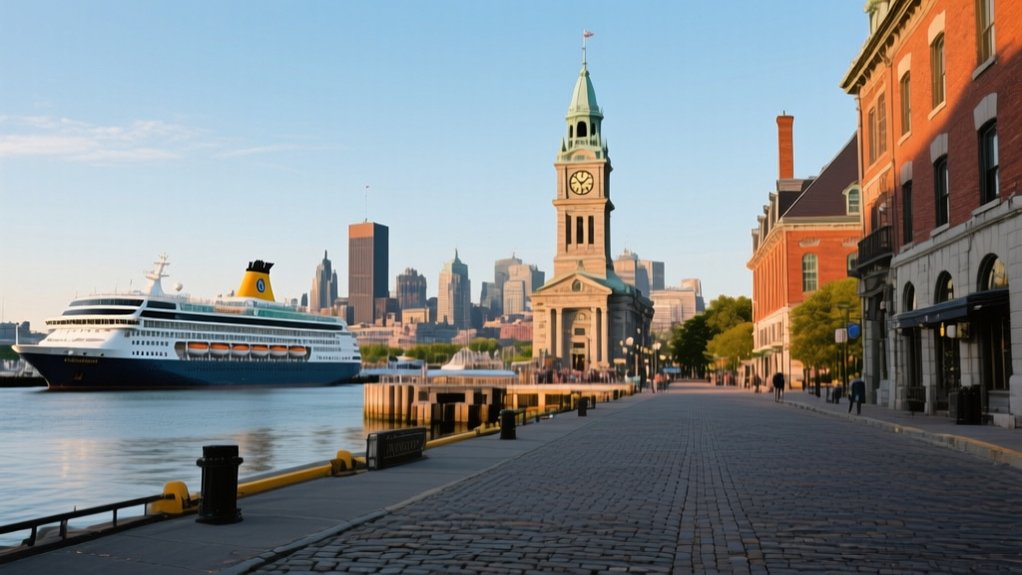
Montreal’s cruise terminal sits close enough to downtown that walking to the city centre takes less effort than waiting for a shuttle. The waterfront near the terminal fills quickly when multiple ships dock, and peak season makes it worse.
Montreal operates differently from other North American cruise ports because the city actually rewards exploration beyond the immediate waterfront. Locals will steer you away from tourist traps if you ask, which is useful because the Old Port charges cruise-passenger prices for everything while better food, actual neighbourhoods, and reasonable costs exist just inland.
Head away from the terminal almost immediately. The Quartier des Spectacles and Saint-Laurent Boulevard are where Montrealers spend their time, and you’ll eat better and spend less money there. The metro is efficient and affordable, though you’ll decide quickly whether single journeys or a day pass make more sense for your plans.
Weather here changes faster than at most ports, even outside winter months, so check forecasts before committing to outdoor activities. If rain arrives, you have plenty of indoor options—museums, markets, and cafés don’t require sunshine to be worthwhile.
The practical advantage of this port is that you’re not confined to a tourist zone. You can experience how the city actually functions without travelling far, which means even a short day ashore feels substantive.
Getting From the Port to Town
Most cruise passengers ignore the walk from the terminal to downtown entirely, opting instead to queue for shuttles. You’ll reach the city centre on foot in about the same time it takes to board a bus, and you’ll actually be moving rather than standing still.
From the terminal, head inland away from the waterfront instead of following signs toward the Old Port. The inland streets are quieter and take you directly toward neighbourhoods with better value for money. If you’re carrying minimal luggage, this route makes practical sense—no waiting, no ticket purchase, and you’ll understand the city layout by the time you arrive.
The metro works well once you’ve decided between a single journey ticket or a day pass. A day pass makes sense if you’re planning to move between several neighbourhoods, whilst single journeys cost less if you’re staying mostly in one area. Ticket machines accept cards, though they occasionally frustrate visitors unfamiliar with French-language interfaces; ask staff for help if you get stuck, as they’re accustomed to assisting cruise passengers.
Taxis charge more than warranted for downtown journeys, making them poor value. The bus network is reliable but slower than the metro, useful mainly for specific suburban attractions rather than the city itself. Your practical approach should be walking to get your bearings first, then using the metro for longer journeys once you’ve decided where you actually want to spend your time.
The Must-Do Experience: Start Here
Most cruise passengers head straight to the Old Port and regret it. The restaurants charge tourist premiums, the shops sell things you can buy anywhere, and you leave having seen a curated version of Montreal rather than the actual city.
Walk inland toward Plateau-Mont-Royal instead. Independent bookshops, vintage stores, and casual restaurants occupy tree-lined residential streets where Montrealers actually spend their afternoons. Spend your first hour simply moving through the neighbourhood without a plan—this gives you a genuine sense of what matters to you before deciding how to use your remaining time.
From there, take the metro to downtown or head to the Mount Royal lookout if the weather is decent. Neither requires booking or feels pressured, and both are solid options if you want a specific focal point rather than just wandering. The lookout involves a walk uphill but gives you a proper view of the city if visibility is decent.
The difference between cruise passengers who understand Montreal and those who don’t comes down to treating it as a place people live in rather than a checkbox list. Choose between exploring a neighbourhood properly or doing one real activity—a museum, the Mount Royal lookout, a specific area—rather than half-doing three things. You’ll actually know something about the place when you get back to the ship.
🗺️ Tours & Experiences at This Port
Skip the ship’s overpriced excursions — browse top-rated independent tours trusted by thousands of cruise passengers.
History Culture and the Top Sights
Montreal’s museums maintain genuine quality, though the Musée des Beaux-Arts and McCord Museum attract cruise passengers in volume and price their tickets accordingly. Booking online before you arrive secures both savings and entry times—popular venues fill their slots within hours of a ship docking. If you care about art or social history, this advance booking proves essential.
The real value of Montreal’s history lies in the streets rather than behind museum walls. Vieux-Montréal works as a coherent historical narrative if you walk it with attention to detail—the riverside warehouses, the basilica, the narrow cobbled streets form a legible pattern of French colonial settlement and industrial development. This approach costs nothing and teaches more than any guided tour within an hour.
The Basilica-Cathedral Marie-Reine-du-Monde merits a visit if ecclesiastical architecture interests you, with genuine architectural merit rather than the polished sterility of museum presentation. Saint Joseph’s Oratory sits on a hill north of downtown and draws substantial crowds, though a morning arrival before other passengers disembark works well—booking an independent guide beforehand typically costs less than the ship’s organised alternative and provides better context for why the site matters to local Montrealers.
Generic historical walking tours sold at the port offer structure without substance. Instead, spend half an hour learning about a specific neighbourhood’s history before you disembark—Griffintown’s industrial past or the Main’s Jewish heritage, for example—then explore on your own terms.
Beyond the Centre: Day Trips and Alternatives
Montreal’s cruise port sits close enough to downtown that most passengers never venture beyond the immediate commercial zone, though the city’s more interesting neighbourhoods require only a short journey on foot or by transit. The organised excursions to the Laurentian Mountains operate on a predictable formula: they cost substantially more than independent transport, consume hours on a coach full of other cruise passengers, and leave you racing back to the ship before you’ve actually seen anything worth remembering.
If waterfalls or mountain scenery genuinely appeal to you, book a small-group tour online before arrival rather than through the terminal desk. These tours fill quickly during cruise season and charge a fraction of what the ship’s excursion programme demands, while offering the practical advantage of earlier departure times that let you skip the queues and return with daylight still available. Always confirm the operator allows flexible return times, since cruise schedules shift and you need certainty you won’t be stranded ashore.
For most cruise passengers with only a few hours on land, however, staying put makes better sense than chasing distant attractions. The Plateau neighbourhood north of downtown functions as an actual place where Montrealers live and work—independent cafés, vintage shops, and ordinary street life cost nothing to experience and reveal far more about the city than any packaged tour. Griffintown’s industrial waterfront offers similar authenticity with fewer tour groups, and you can walk there directly from the port without booking anything.
The logic is straightforward: paid excursions to distant sites primarily exist to extract money from time-pressed passengers facing artificial urgency. Your real advantage lies in proximity—use your limited hours to understand a specific neighbourhood thoroughly rather than racing toward a checkbox destination that dozens of other ships visited the same week.
Shore Excursion or Going It Alone
The ship’s excursion desk will present independence as risky, framing their marked-up tours as the only way to guarantee you return on time—a persuasive argument that collapses the moment you realise Montreal’s public transit runs reliably and the port sits within walking distance of most neighbourhoods worth visiting.
The genuine choice isn’t between ship excursions and chaos, but between paying substantially more for a guided coach experience or spending a fraction of the price exploring on your own terms. If you want professional guidance—say, a walking tour of a specific neighbourhood or a food-focused exploration of local culture—book an independent small-group tour online before you arrive, as the best operators fill quickly during cruise season and booking ahead locks in considerably lower rates than the ship offers while guaranteeing a guide who actually knows the city rather than someone delivering the same script to five ships a week.
Going entirely solo works brilliantly if you’re comfortable with a map, public transit, or simply wandering. Montreal’s metro is straightforward to navigate from the port, bus routes are clearly marked, and locals are generally helpful when asked directly. Shore excursions at independent operators often provide curated experiences that rival ship offerings at a fraction of the cost. The Plateau and Griffintown are both accessible without a guide, and you’ll spend what you save on excursions on a decent meal instead—arguably a better use of your time and money.
Ship excursions guarantee hand-holding and certainty, but at a significant premium. Independent tours offer genuine value. Going it alone demands slightly more confidence but rewards you with authentic discovery and cash left in your pocket, so choose based on what actually matters to you rather than on the urgency the cruise desk creates.
Before You Leave the Ship: Montreal Practicalities
Montreal’s port terminal sits adjacent to the Old Port, which means the cruise ship experience—horse-drawn carriages, overpriced cafés, street performers—captures your attention the moment you leave the ship, but it’s also where a coffee costs nearly double what it does a short walk inland. The actual city exists beyond the cobblestones, and reaching it requires only a metro ride or a walk uphill.
Your biggest tactical advantage is timing. Most cruise passengers cluster in the Old Port during the early hours ashore, which means the Plateau—Montreal’s best neighbourhood for independent exploration, shopping, and proper restaurants—remains relatively quiet until midday. If you head there immediately, you’ll experience the neighbourhood as locals do before the crowds arrive.
The metro entrance near the port is clearly marked, the system uses a single flat fare regardless of distance, and a day pass offers considerably better value than individual tickets. Alternatively, walk toward Rue McGill and continue uphill; you’ll naturally drift toward the city centre and the Plateau without needing navigation beyond following the terrain.
Avoid the restaurants surrounding the Old Port fountains; they’re staffed for turnover, not quality, and prices reflect the captive market. Instead, eat where locals do—the Plateau has exceptional casual lunch spots that cost a fraction of what you’d pay nearby, and the difference between generic and decent food often comes down to walking past the first open door rather than stopping at it.
🗺️ Tours & Experiences at This Port
Skip the ship’s overpriced excursions — browse top-rated independent tours trusted by thousands of cruise passengers.
Your Port Day: A Sample Itinerary
Montreal’s early advantage disappears by midday, so how you sequence your time matters far more than where you go. Head straight from the terminal to the Plateau using the metro or on foot—arriving before mid-morning means you’ll navigate cafés and streets populated by locals rather than tour groups. Your first two hours should focus on Rue Saint-Denis and its surrounding blocks, where independent shops and vintage stores reflect what people who live here actually want to buy.
Eat lunch at a casual bistro tucked away from the main streets, where locals eat rather than where cruise passengers congregate. The food will be better and the bill substantially smaller than what you’d pay at Old Port restaurants. Skip the urge to head back downhill for fountain views—the photographs look identical regardless of where you’re eating anyway.
Book an independent tour in advance if you want one, since popular options fill weeks ahead. Schedule it for early afternoon once you’ve already oriented yourself and eaten properly. Underground city tours or walking tours offer better value and smaller groups than standard ship excursions, but they require planning ahead rather than booking at the terminal.
Spend your remaining hours either continuing to explore the neighbourhood if you haven’t booked a tour, or return to the Old Port with a clearer sense of what’s actually worth your attention. By late afternoon you’ll have a genuine understanding of the city beyond what’s immediately visible from the cruise terminal, which is the real advantage of moving away from the obvious areas first rather than reserving them as your last stop.
🗺️ Tours & Experiences at This Port
Skip the ship’s overpriced excursions — browse top-rated independent tours trusted by thousands of cruise passengers.
Book your Montreal day
Tours for this port, compare before you book
Getting around in port
✈️ Before you sail: eSIM, insurance, luggage, flight delays
Ships In Montreal
Upcoming calls from our sailings tracker, updated regularly.
ms Volendam
Holland AmericaSat 29 May
⚓ 07:00–19:00
ms Volendam
Holland AmericaTue 8 Jun
⚓ 07:00–19:00
ms Volendam
Holland AmericaSat 26 Jun
⚓ 07:00–19:00
ms Volendam
Holland AmericaSat 10 Jul
⚓ 07:00–19:00
ms Volendam
Holland AmericaWed 1 Sep
⚓ 07:00–19:00
ms Volendam
Holland AmericaSat 11 Sep
⚓ 07:00–19:00