Keelung Cruise Port Guide
From industrial terminals to hidden temples and night markets, discover how to escape crowded cruise tours—but where should you really go first?
In this guide
Try one free personalised day plan — built around your ship’s actual arrival and departure times. Then get every port on your cruise done the same way from £7.99 (about $10).
Cruise Port Overview: What To Expect
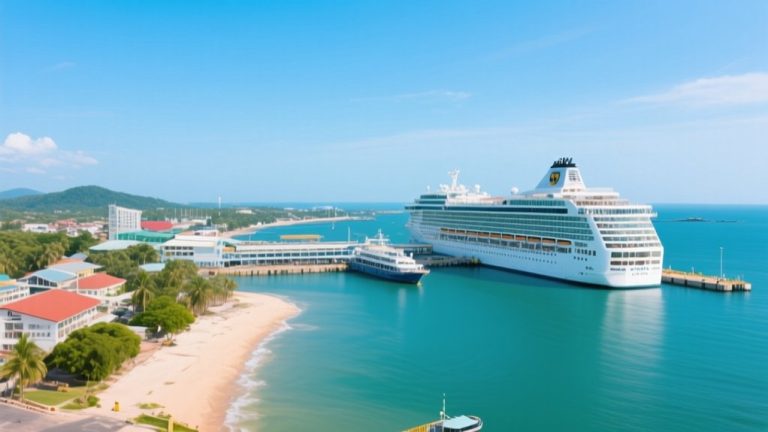
The cruise terminal at Keelung sits right in the city centre, a few minutes’ walk from Keelung Station and Miaokou Night Market, so you lose almost no time to transfers. The terminal itself functions reasonably well—no confusing queues or Byzantine layouts—and for places further out you can take a taxi, local bus, train or pre-arranged transport. Your ship docks at the main harbour where basic facilities exist, though the actual Taiwan experience begins only after you’ve left the terminal behind.
The area immediately surrounding the port is industrial and dull. Cruise lines push their expensive excursions here specifically because getting around independently demands forethought, so ignore their sales pitches. Arrange your own transport or book guided tours online in advance—the better experiences disappear quickly once cruise passengers arrive, and you’ll spend significantly less money going independent than paying the ship’s markups.
Keelung functions as a working fishing town with its own character rather than a port retrofitted for tourists. You’ll encounter fishing boats, local markets, and temples that actually serve the community. The waterfront has improved recently and contains pockets worth your time, but only if you know what to seek out—wandering without direction lands you in the touristy strip near the terminal where meals cost inflated prices and the atmosphere rings hollow.
The only rule that matters is leaving the immediate port area. Nothing worthwhile happens until you do.
Getting From the Port To Town
Taxis queue outside the terminal and drivers will take longer routes to increase the fare, so insist they use the metre or agree on a price beforehand. Local buses cost significantly less but require either Mandarin or an offline map to navigate. Booking a private driver or guided tour before arrival locks in costs and eliminates the hassle of negotiating with strangers while your shore time disappears.
Trips out of central Keelung involve traffic variables that make timing unpredictable. Most independent tours include transport, meaning you pay once rather than juggling transactions whilst exhausted cruise passengers crowd around you. If you’re going alone, aim for Miaokou Night Market or the hillside temples of Zhongzheng Park—both are reachable on foot from the harbour, though this requires knowing where you’re headed rather than wandering hopefully.
Tours book out quickly because good experiences with English-speaking local guides fill within hours of ships docking. Booking online before arrival costs far less than your cruise line’s markup and puts you in smaller groups instead of massive crowds. Reserve your spot the moment you’ve confirmed your cruise rather than waiting until you’re in port, when your options have already evaporated.
The Must-Do Experience: Start Here
Keelung’s actual advantage is that you can build a complete day without advance bookings—the harbour sits within walking distance of real places rather than being cordoned off by shuttle operators and tour desks. The problem is that aimless wandering will drain time you don’t have on a cruise day, so deciding what matters to you before disembarking makes the difference between rushed confusion and actual satisfaction.
Miaokou Night Market runs all day despite its name. The seafood stalls and soup vendors operate at local prices with no English menus because locals eat here—you’re not paying the markup that comes with tourist-facing establishments. Go early enough that you can actually move through the alleyways, and your breakfast will cost less than anything near the terminal.
Zhupu Altar in Zhongzheng Park is genuinely quiet inside, which you’ll notice immediately because almost no one from the cruise ships goes there. The walk is steep enough to matter but finishes in under an hour, and you’ll pass neighbourhood shops selling incense and postcards at prices that haven’t been inflated for foreign visitors. This tells you something about how little effort most cruise passengers expend beyond the immediate dock area.
If you want a guide who speaks English and lives in Keelung, book an independent operator before you arrive rather than paying the cruise line’s markup. They fill up weeks ahead during peak season, so securing a spot now means a smaller group and someone who actually knows the place rather than someone reading from a script.
History Culture and the Top Sights
Keelung’s history is inseparable from its harbour, which has shaped the city for centuries as a strategic trading post and fishing hub—understanding this context actually changes how you experience the place rather than just moving through it.
Zhupu Altar sits on the hillside of Zhongzheng Park overlooking the water, and locals treat it as part of daily life rather than a tourist attraction. The temple itself is modest compared to the grandeur you might expect, but that’s precisely why it feels genuine. You’ll encounter actual worshippers, incense smoke that catches you unprepared, and views across the harbour that make the climb worthwhile.
The neighbourhood around it—narrow streets, family-run shops, elderly residents—shows you Keelung as people actually live in it rather than as cruise passengers pass through it. This is where you see the texture of everyday life rather than a curated version of it.
Badouzi, east along the coast from the harbour, combines the marine science museum with coastal cliffs and a working fishing village. The clifftop parks such as Wangyou Valley take minimal effort to explore. What matters is that you’re standing on the headland that looks out over Taiwan’s northern approaches, and the physical space still communicates that importance.
The area remains genuinely underdeveloped by tourist standards, meaning your coffee costs what locals pay and you’re not navigating crowds manufactured for visitor convenience. You get a sense of how the port actually functions rather than how it’s been packaged.
Local independent guides can explain Keelung’s colonial and modern history far better than cruise-ship operators manage in rehearsed commentary. Book one in advance online, as the best guides fill quickly during peak season, and you’ll spend considerably less than the ship’s standard excursion while securing someone who actually knows the territory.
Beyond the Centre: Day Trips and Alternatives
Most cruise passengers stick to Keelung’s harbour district, leaving the quieter spots and better value just beyond where the standard tours go. This means you get practical options that actually work within a port day.
Jiufen Old Street functions as a working neighbourhood rather than a theme park version of itself. The snack vendors are there because locals eat there, the tea houses are family operations, and people conduct genuine business. Timing matters—arrive early or return in late afternoon to experience the place before or after the cruise ship crowds arrive mid-morning.
Yehliu Geopark sits further up the coast and offers geological formations worth the journey. Honeycomb rocks, sea-carved stone pillars, and coastal cliffs exist at a scale that photographs flatten into something less impressive than reality. Moderate walking on established paths gets you close enough to understand what you’re looking at, and the entry fee is minimal compared to what cruise operators charge.
Using local transport instead of cruise excursions gives you meaningful savings and control over how you spend your hours ashore. The transport connections are less convenient than a coach picking you up at the pier, but the trade-off between minor inconvenience and genuine autonomy favours going independently. You move at your own pace rather than keeping time with a group.
Local guides working through established platforms cost substantially less than cruise operator rates and actually know the geology and history. Booking in advance matters during peak season because the good ones fill up quickly. Someone who can explain what you’re looking at transforms the landscape from an impressive backdrop into something that makes sense and stays with you after you leave.
Shore Excursion or Going It Alone
The ship’s excursion desk presents this as a binary choice, but you have more options than that. Cruise-organised excursions prioritise getting everyone onto a bus rather than giving you value for money—you’ll spend half your port time travelling, follow a guide shepherding forty other passengers, and pay substantially more than you’d spend going independently. If you’re travelling alone, older, or genuinely uncomfortable navigating unfamiliar transport systems, paying extra for the ship’s simplicity might make sense.
Going independently requires knowing where you actually want to go before you arrive. Jiufen Old Street and Yehliu Geopark are both reachable by local transport without any specialised knowledge, which means you control how long you stay at each place and when you move on. Private local guides found through established online platforms charge far less than cruise operators and let you decide your own route, walking pace, and how much time you spend anywhere. Consider purchasing a local eSIM data plan to avoid roaming charges while using maps and translation apps during your exploration.
The practical reality is this: booking a private guide online in advance costs less, lets you focus on what genuinely interests you rather than what the cruise line choreographs, and means you’ll avoid the crowds doing identical tours. Reliable guides book up during busy seasons, so arranging this before your port day gives you better options. The trade-off is straightforward—pay more for the ship’s convenience and thinking for you, or pay less and manage the logistics yourself.
What the Cruise Desk Leaves Out About Keelung
Keelung’s harbour ferries operate on schedules that bear little relation to what the cruise desk announces, and arriving at the terminal just before departure almost guarantees you’ll miss your boat. The ferry timetables published locally are reliable enough to depend on, so check them yourself online before you leave the ship rather than accepting whatever the excursion desk offers as fact.
The streets immediately around the cruise terminal exist solely to extract money from passengers, with prices reflecting this arrangement entirely. You’ll encounter overpriced instant noodles, mediocre seafood, and souvenir shops stocked with identical merchandise across all outlets. Walking further inland takes you to where locals actually spend their money on food, where a proper meal costs a fraction of terminal prices, and where you see Keelung as it functions rather than as a performance for cruise passengers.
Jiufen Old Street becomes progressively more congested through the middle of the day, with the afternoon crowds reaching genuinely uncomfortable density. If you’re going independently, early morning or evening works far better than midday. Yehliu Geopark has similar crowd problems, though the space spreads visitors across a larger outdoor area, and neither location requires advance booking, so you retain real control over your timing.
Finding a local guide through established platforms before your arrival gives you someone who knows when the crowds thin, where the photographs actually work, and which tea houses are worth sitting down in. This approach costs less than booking through your ship while giving you better results.
Your Port Day: A Sample Itinerary
Most cruise ports reward passengers who ignore the official schedule entirely, and Keelung rewards them most of all. Your real day begins the moment you ignore the cruise desk and make your own decisions about timing.
Start early by heading directly to Jiufen Old Street before the crowds arrive. The narrow alleyway shops and tea houses function properly only when you’re not queuing shoulder-to-shoulder with three hundred other people, and the street’s genuine character emerges in early morning light rather than under the midday crush. Grab breakfast from a local vendor—proper food at proper prices—then spend time exploring the side passages where tourists rarely venture.
By late morning, shift to Yehliu Geopark if the weather cooperates. The geological formations spread visitors across outdoor space rather than funnelling them through corridors, which makes the experience considerably more bearable than Jiufen becomes by noon. The coastal views reward decent photography, and you’re unlikely to see genuine rush hour here even during peak season.
For your afternoon, consider booking an independent guided tour in advance rather than taking whatever the ship offers. A local guide knows exactly when Keelung’s neighbourhoods settle into their working rhythm and can take you to temples, local markets, and tea houses that exist entirely outside the cruise passenger circuit. Securing your spot before you sail saves money and eliminates the scramble on your port day.
Head back to the terminal well before all-aboard, which leaves you buffer time without the anxiety that catches latecomers.
Book your Keelung day
Tours for this port, compare before you book
Getting around in port
✈️ Before you sail: eSIM, insurance, luggage, flight delays
Ships In Keelung
Upcoming calls from our sailings tracker, updated regularly.
Royal Princess
Princess CruisesFri 9 Oct
⚓ 07:00–18:00
Carnival Luminosa
CarnivalFri 16 Oct
⚓ 08:00–22:00
Costa Serena
Costa CruisesWed 21 Oct
⚓ 10:00–20:00
Celebrity Millennium
Celebrity CruisesSun 8 Nov
⚓ 07:00–18:00
MSC Bellissima
MSC CruisesWed 25 Nov
⚓ 07:00–18:00
MSC Bellissima
MSC CruisesSun 29 Nov
⚓ 07:00–23:00