Kyoto Cruise Port Guide
Uncover how cruise passengers can escape pricey ship excursions and explore Kyoto’s hidden temples at their own pace—but there’s a critical detail most travelers miss.
In this guide
Try one free personalised day plan — built around your ship’s actual arrival and departure times. Then get every port on your cruise done the same way from £7.99 (about $10).
Cruise Port Overview: What to Expect
Kyoto has no cruise port, which means your ship will dock at Kobe or Osaka instead, or on some itineraries at Maizuru on the north coast, and you’ll need to factor in significant travel time to reach the city. This reshapes your entire day because you’re not stepping straight into the action—you’re committing to transport, arriving later than you might anticipate and needing to leave earlier than you’d prefer. The upside is that all three ports have reliable train connections, and once you know the route, getting there is straightforward.
Many cruise lines charge substantial fees for what are essentially guided train journeys with strict time windows attached. Independent travel will get you there faster, cost you less, and hand you control over how you spend your hours ashore—a distinction worth keeping in mind when the onboard travel desk presents their packaged options. The trade-off is that you need to do the legwork yourself beforehand.
Seasonal variation affects your experience here more than it does at most ports. Summer brings genuine heat that can be punishing; spring and autumn offer comfortable conditions. Winter is quieter but colder, and crowds are present year-round regardless of when you visit. The temples draw people constantly, so expecting solitude isn’t realistic.
Arrange your train tickets before you leave the ship or book them through a local operator in advance. Popular guided tours fill quickly when cruise passengers have limited hours available, so waiting until you’re ashore leaves you with reduced options. Planning ahead and starting early gives you an actual day in the city rather than a rushed exercise in ticking boxes.
Getting From the Port to Town
Taking the train alone beats paying your cruise line to pack you onto a coach with dozens of other passengers. The independent route costs less, moves faster, and gets you into the city while daylight remains useful rather than fading into dusk.
From Kobe, the Shinkansen reaches Kyoto from Shin-Kobe station in around half an hour and costs a fraction of what the ship charges for the same journey. From Osaka the trip is even quicker. Both stations have English signage sufficient to prevent you spending your opening minutes in Japan feeling disoriented.
Station staff expect foreign travellers and ticket queuing works straightforwardly once you identify the correct counter. Buy your ticket before boarding since on-train purchases create unnecessary complications. Trains depart regularly throughout the day, so you’re not locked into a single departure window. You can also book guided excursions at the port to complement your independent train journey into the city.
Reserved seating means no fighting for space, and the ride stays smooth enough that you can actually rest instead of gripping an armrest through constant jolting. Book your return ticket at the same time rather than facing crowded queues two hours before your ship leaves, when other passengers create long waits. Sorting both journeys together eliminates that particular stress and lets you focus on the city itself.
The Must-Do Experience: Start Here
Most cruise passengers spend their first hour in Kyoto searching for authenticity in the wrong places, when the actual city reveals itself in the basement food halls of Kyoto Station. The underground level shows you how ordinary Japanese people eat: standing at counters, selecting from dozens of regional options, paying less than you would above ground for objectively better food. You’ll stand among salarymen, grandmothers, and schoolchildren rather than other tourists, and the whole operation runs on efficiency rather than ceremony.
Eat something you wouldn’t recognise at home. Thirty minutes here teaches you more about how Kyoto functions than a morning spent photographing temples. You’ll understand the rhythm of the place before you surface into the crowds.
From here, you can move in two practical directions. Head north toward the temples and gardens if you want quiet and space to think, though early arrival matters because crowds arrive predictably. Head into the city centre if you want to see where people actually live and work rather than where visitors typically congregate.
Either choice works better because you’ve already broken the pattern. You’ve eaten according to local logic, which means everything afterwards—whether you’re walking temple grounds or shopping streets—feels like geography rather than performance.
🗺️ Tours & Experiences at This Port
Skip the ship’s overpriced excursions — browse top-rated independent tours trusted by thousands of cruise passengers.
History Culture and the Top Sights
Kyoto’s temples matter less for what they are than for what their preservation tells you about time moving differently here. Standing among crowds photographing themselves in front of 14th-century buildings creates an odd sensation—the past hasn’t changed, but everything around it has. This tension between stasis and modern tourism is what actually lingers after you leave.
The main temples—Kinkaku-ji, Fushimi Inari, Kiyomizu-dera—warrant the trip, though when you arrive determines whether you’ll experience them or simply queue past them. Early morning visits before nine mean you’ll actually stand in the spaces rather than shuffle through crowds. Most cruise passengers arrive mid-morning when the grounds are already overwhelmed, which is precisely why booking an independent guide beforehand or securing a morning tour online before docking makes practical sense.
Gardens operate differently from temples and require a willingness to sit that most tourists skip. Twenty minutes on a bench at Ryoan-ji or Saihō-ji reveals what centuries of preservation protected—something that photographs and rushing through entirely miss. This patience separates understanding from tourism.
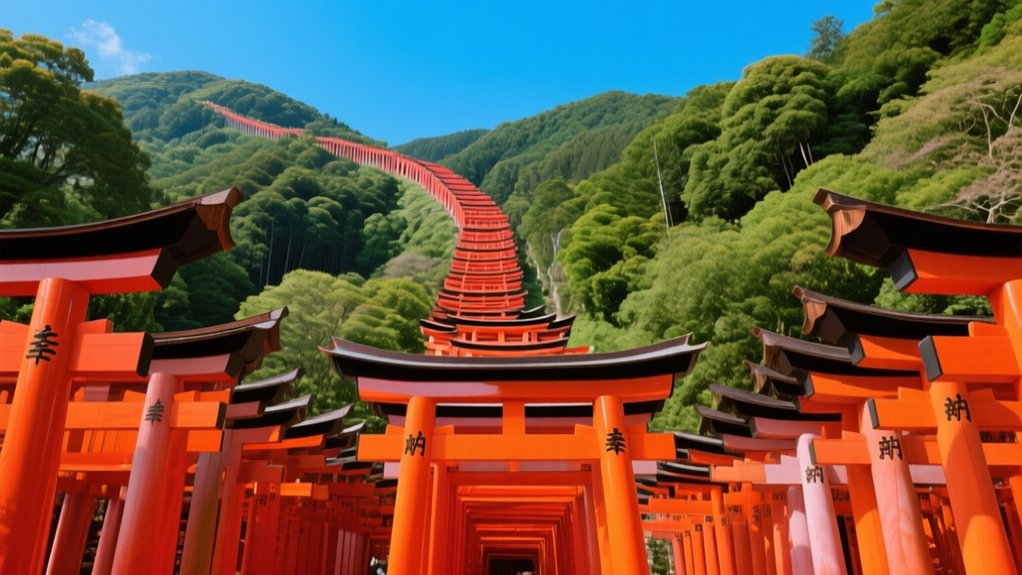
Kinkaku-ji demands considerable effort for the experience of standing across water from a building, and Fushimi Inari’s thousands of red gates create a genuinely arresting visual even when crowded, though the repetition becomes almost abstract rather than spiritual. Kiyomizu-dera offers actual city views from its height, which distinguishes it from other temple courtyards. Choose based on what you actually want to understand rather than what feels obligatory to complete.
One temple experienced properly serves you far better than three rushed through. Your energy and attention matter more than which sites you select.
Beyond the Centre: Day Trips and Alternatives
Ship excursions to Kyoto’s outlying temples cost roughly twice what independent guides charge for the same experience. This gap matters less for the money itself and more because it forces you onto a predetermined schedule with sixty other passengers instead of letting you move at your own pace with someone who actually understands the city.
The temples beyond central Kyoto—Byōdō-in, Enryaku-ji, Ohara’s mountain temples—are genuinely worth the effort to reach them. They receive fewer visitors, attract less photography tourism, and possess more architectural distinction than the three famous sites everyone queues for. An independent guide arranged online before you dock can handle transport and timing that suits your actual day rather than forcing you into a rigid morning or afternoon slot.
The best independent guides are local university students or retired teachers working freelance, not tourism companies. They charge considerably less than ship excursions, speak excellent English, and have actual knowledge rather than memorised scripts. Booking through established platforms beforehand secures someone reliable and means you’re not relying on availability when your ship arrives.
If you care about gardens or mountain temples, skip the crowded central sites and spend your day in quieter neighbourhoods where preservation work feels genuine rather than performative. Byōdō-in’s reflected temple actually delivers what Kinkaku-ji promises but fails to provide when you’re standing three-deep in tourists. Your time matters more than visiting everything—spend it where you can actually think.
Shore Excursion or Going It Alone
The cruise port sits far enough from central Kyoto that a ship excursion eats into your day before you’ve done anything worthwhile. Most of your time vanishes waiting for other passengers to board coaches and following a schedule built around the slowest walker in the group. Going independently actually gives you more usable hours because you move at your own pace and skip the herding.
Trains from the port run constantly and are straightforward to navigate even if you don’t speak Japanese. The cost is substantially lower than the cruise desk’s equivalent offering. You can time your temple visit to catch better light, linger somewhere worth lingering, and leave the moment you’ve seen what you came for rather than when someone checks their watch.
Booking a local guide through established platforms before you dock solves the navigation problem entirely. Freelance university students or retired teachers charge far less than ship excursions, speak fluent English, and can actually explain the reasoning behind a garden’s design rather than recite memorised facts. These guides book up quickly during cruise season, so arrange this before you arrive at port.
If temples and gardens genuinely engage your interest, paying for a private guide returns value through better access and places the standard ship groups simply don’t reach. If you prefer exploring without a guide, trains make that entirely workable. Either approach gives you genuine control over how you spend your day and leaves more money unspent.
🗺️ Tours & Experiences at This Port
Skip the ship’s overpriced excursions — browse top-rated independent tours trusted by thousands of cruise passengers.
Kyoto Notes the Excursion Desk Skips
The cruise port sits on reclaimed land at Maizuru, positioned far enough from anything substantive that the cruise desk glosses over the geography when selling you their packaged tours. What they omit is that nearly every other passenger follows the identical route, which means you’ll spend your afternoon queuing behind the same crowd at the major temples and pavilions.
The trains from Maizuru work efficiently and cost little, but the system confuses visitors unfamiliar with Japanese rail operations. You cannot simply hop on and off as you might expect—you need to understand how separate rail companies operate independently, which services go where, and how to decipher timetables without English signage. The cruise desk recognises this friction and uses it as justification for why you should book their excursion instead.
Your better option involves booking a private guide through reputable platforms before your ship arrives. Local guides know which temples have fewer crowds at particular times and which gardens justify their entrance fees versus which ones have become purely photogenic. They cost considerably less than ship excursions and you’ll actually understand what you’re looking at rather than standing silently while someone recites prepared notes.
Download a translation app that functions offline before you dock. It won’t resolve every problem, but it eliminates enough friction that managing independently becomes genuinely workable. You’ll spend more time seeing the city and less time waiting for coaches to fill up.
🗺️ Tours & Experiences at This Port
Skip the ship’s overpriced excursions — browse top-rated independent tours trusted by thousands of cruise passengers.
Your Port Day: A Sample Itinerary
The Philosopher’s Path floods with guided groups by mid-morning, which means your best window for a quiet walk happens before most passengers have cleared customs. Start at Nanzenji Temple while the air still feels yours alone—the grounds open early, and you’ll move through without pressing shoulders with other cruise passengers. The simplicity of the setting matters more than any architectural detail, and you’ll understand why better when you’re not queuing.
Walk the Philosopher’s Path afterward, heading north along the canal. The route moves you past smaller temples and gardens where the crowds thin considerably, and you’ll pass students, cyclists, and locals going about ordinary days rather than performing tourism for cameras. The pace is comfortable enough to actually look at what surrounds you.
Break for lunch near Ginkakuji at the top of the path. The restaurants here cost more than they should, but the alternatives require maneuvering back toward central Kyoto where tourist pricing peaks during midday. Eat something simple—udon or rice bowls work well—rather than attempting elaborate meals when you’re conscious of time.
Spend your afternoon at either Ryoanji or Arashiyama depending on your tolerance for crowds. Ryoanji’s rock garden rewards observation over photography and feels genuinely contemplative if you sit quietly for a stretch. Arashiyama’s bamboo grove photographs better than it actually experiences, though the surrounding temple grounds hold genuine interest if you move past the selfie zone.
Book a private guide through established platforms well ahead of your arrival. They’ll navigate the rail system, time your arrivals strategically, and explain what you’re actually looking at rather than herding you through a predetermined route.
Anything that takes you well beyond Kyoto is easier booked in advance. what runs in Kyoto lists the tours on offer.
🗺️ Tours & Experiences at This Port
Skip the ship’s overpriced excursions — browse top-rated independent tours trusted by thousands of cruise passengers.
Book your Kyoto day
Tours for this port, compare before you book
Getting around in port
✈️ Before you sail: eSIM, insurance, luggage, flight delays
Nearby cruise ports