Geiranger Cruise Port Guide
Cruise ship visitors flock to Geiranger, but few discover the hidden strategies that unlock genuine fjord experiences beyond tourist traps.
In this guide
Try one free personalised day plan — built around your ship’s actual arrival and departure times. Then get every port on your cruise done the same way from £7.99 (about $10).
Cruise Port Overview: What to Expect
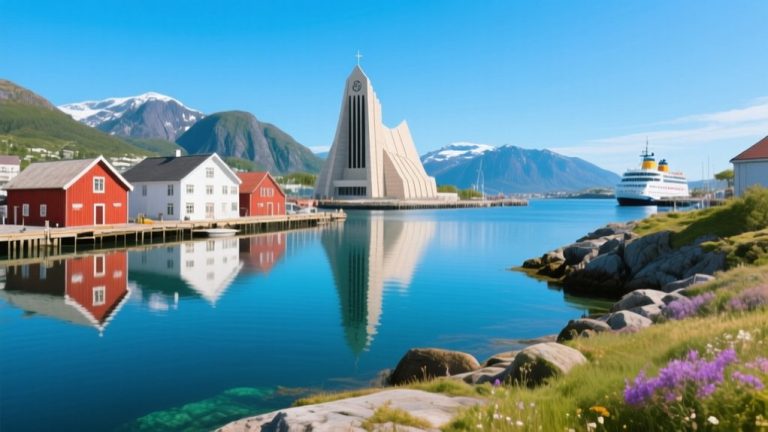
The fjord is narrow enough that your ship will look absurdly oversized against the landscape, an effect no photograph prepares you for. Cruise operators limit visitor numbers here because the anchorage genuinely cannot absorb more traffic—on busy days, the port functions as a floating holding area rather than a destination.
Most passengers underestimate how little there is to occupy you if you remain near the dock. Geiranger village is small, with a few shops, restaurants, and hotels strung along the waterfront, and a walk around it takes less than an hour. The actual value lies in what you do away from the village: hiking the mountains, kayaking, or reaching the plateau above.
Food near the ship costs substantially more than reasonable, which happens everywhere a single vessel delivers several hundred people with limited alternatives. This is not price gouging so much as basic supply and demand—accept it and move on.
Your practical advantage is booking activities independently before arrival. Popular hikes and kayak trips fill during peak season, and passengers who gamble on arranging things on departure day routinely face poor options. Smaller guides operating outside the cruise-ship system tend to charge less, work with reasonable group sizes, and understand the terrain well enough to adapt when conditions worsen, which they often do. Consider exploring guided excursions to secure the best experiences and pricing.
Weather here shifts without warning, so carry layers regardless of the forecast.
Getting From the Port to Town
The village sits directly at the dock, which sounds convenient until you realise there’s nowhere worth going once you’ve walked its length. Your ship drops anchor in the fjord rather than tying up to a proper quay, so you’ll take a tender ashore—a process that queues badly on busy days, meaning your effective time ashore shrinks before you’ve even stepped onto Norwegian soil. Most passengers waste their first hours circling the same few blocks, browsing identical souvenir shops and overpriced cafés.
The real decision happens immediately: stay local and feel short-changed, or organise a proper activity beforehand. Walking uphill from the village leads nowhere particular without a destination in mind, and navigation is muddier than you’d expect. Your best move is booking a guided hike or kayak tour before your ship arrives.
Independent operators collect clients from the dock and transport them directly to trailheads or water launches, meaning you lose no time to aimless wandering. These tours typically cost considerably less than ship-organised excursions and work with smaller groups who actually engage with the landscape rather than shuffle through it. If you arrive without prior arrangements, the visitor information cabin near the dock can point you toward available guides, though popular slots fill early on cruise days.
Hiring a private guide independently through established local operators beforehand is your insurance policy. Book a full-day mountain hike or kayaking expedition, and your port day transforms from a glorified shopping trip into something with actual purpose. This approach gives you control over what you do with limited time ashore rather than defaulting to what the cruise industry assumes you want.
The Must-Do Experience: Start Here
Most visitors to Geiranger squander their port day waiting for something to happen instead of arranging it themselves—a passivity that leaves them missing the actual reason to stop here. The fjord is the attraction, not the village, and your day succeeds only if you position yourself to witness the geography that justifies a cruise stop.
A guided kayak expedition puts you at the fjord’s scale in a way deck observation cannot match. You paddle beneath waterfalls, enter quiet coves, and grasp why the rock walls matter—something that simply cannot register from a distance. Independent kayak operators work from the dock and collect small groups directly, which eliminates wasted coordination time and costs less than your ship’s excursion desk charges.
If you have no fear of heights, a mountain hike accessed through independent guides offers the inverse view: looking down into the fjord rather than up at it. The landscape logic becomes evident once you’re walking it, and the perspective fundamentally reorganises your sense of the terrain. Book these before your ship arrives, as the best operators fill quickly on cruise days.
🗺️ Tours & Experiences at This Port
Skip the ship’s overpriced excursions — browse top-rated independent tours trusted by thousands of cruise passengers.
History Culture and the Top Sights
Geiranger has almost no history, which makes it straightforward to navigate as a visitor—you can stop worrying about what you’re supposed to see and focus on what’s actually there. The village is a collection of modest wooden buildings clustered around the dock, mostly serving cruise passengers through cafés and souvenir shops. A small church and heritage photographs in the tourist office acknowledge the settlement’s farming past, but walking the main street takes perhaps twenty minutes and teaches you little except that tourism has replaced any authentic character that once existed here.
The Norwegian Fjord Centre, a short uphill walk from the village, is worth your time. It explains the fjord’s landscape and the lives of families who farmed these impossible slopes, offering genuine context rather than tourist packaging. The modest admission fee buys real perspective on what you’re actually looking at when you gaze at those vertical cliffs.
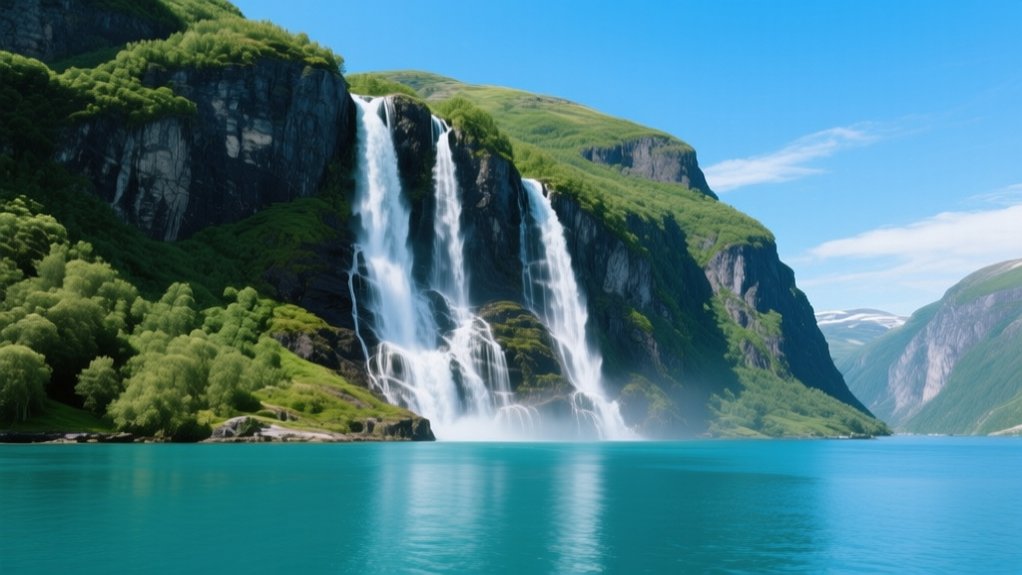
The Seven Sisters waterfall and Suitor’s Beard waterfall are visible from the fjord itself during a kayak journey, so you don’t need to chase them separately. Save your energy for the landscape that justified your ship stopping here. That’s where Geiranger’s substance lies.
Beyond the Centre: Day Trips and Alternatives
Shore Excursion or Going It Alone
The ship’s organised trip to the eagle’s bend viewpoint costs considerably more than arranging it yourself, and you’ll spend half your time queuing with hundreds of other passengers for a view you could reach with far less hassle independently. The viewpoint itself genuinely matters—the fjord makes a dramatic turn there—but the coach experience reduces it to a checkbox rather than a place where you actually stand and absorb the scale of what surrounds you. Small-group hikes and kayak tours run by independent operators depart directly from the village dock and let you linger where the light works best or move on when you’ve had enough, which means you’re not locked into someone else’s schedule.
Book these tours online in advance because the better guides fill quickly once the cruise ships arrive and spaces disappear fast. Walking works just as well as paddling if you prefer solid ground, and the hiking paths above the village give you proper fjord perspective without the crowds that clog the obvious trails. The climb requires decent footwear and reasonable fitness, but the absence of other people makes it worthwhile on its own.
Self-guided kayaking is another option that lets you paddle at your own pace and reach the waterfalls when you choose rather than when a timetable says so. The honest reality is that Geiranger reveals itself to people who resist the cruise ship formula—arrive at the dock early, bypass the crowded main street, and get onto the water or up into the hills where the fjord actually shows you what it is instead of a coach window full of people all taking the same photograph.
🗺️ Tours & Experiences at This Port
Skip the ship’s overpriced excursions — browse top-rated independent tours trusted by thousands of cruise passengers.
Shore Excursion or Going It Alone
Most cruise passengers assume the village shops sell Norwegian handicrafts at Norwegian prices. They don’t—you’re paying cruise markup on items that cost half as much in Bergen or Oslo. The real insight is that Geiranger’s economy runs entirely on the three hours your ship is docked, which means every café, gift shop and tour operator has calculated exactly how much money passes through in that window and priced accordingly.
The two main trails from the village centre—the ones shown on every map and mentioned in every guidebook—are shoulder-to-shoulder with other passengers by mid-morning. The paths themselves are fine, but if solitude matters to you, book a small-group hike through an independent operator instead. These guides know quieter routes that take you above the crowds, and because they’re not herding fifty people through a fixed itinerary, you actually get to experience the scale of the fjord rather than just tick it off. Many cruises offer guided tours that follow standard routes, but independent operators provide access to less-trafficked alternatives.
Timing is everything: arrive at the dock earlier than you think necessary and head straight for the hills or water before the village fills with thousands of other passengers. By lunchtime the main street becomes genuinely unpleasant—queues form outside the few restaurants and the gift shops feel suffocating. Your best day comes from getting out of the village entirely within the first hour, which means booking that independent kayak tour or mountain guide online before you sail.
The boats that depart at peak cruise ship time are rammed; the ones that leave early are not. Early departures mean you’ll have water or trails mostly to yourself, and you’ll actually be able to move at your own pace rather than following a shuffle. Book anything that leaves before mid-morning if you want any real control over your experience.
Small Things That Make a Difference in Geiranger
The cruise line’s information desk conveniently omits that a ordinary supermarket sits near the terminal, frequented entirely by locals who actually live here. You’ll find the same goods the village shops charge double for—coffee, snacks, ordinary souvenirs without national branding—within easy walking distance of where you exit the ship.
The two principal restaurants in the village reach capacity by mid-morning, which means arriving at midday leaves you queuing through most of your port time or returning to the ship empty-handed. The practical solution involves eating breakfast ashore first, at a café that opens early and hasn’t yet filled with cruise passengers. You spend less, eat better food, and retain actual hours to explore.
Your real advantage comes from observing where cruise passengers never venture. Most follow the ship’s recommended route or the standard guidebook map, leaving the actual local spaces—the harbourside bakery, the small museum, the ordinary café where fishermen drink coffee—relatively quiet even during peak hours. Walking deliberately away from the main street and noticing where Norwegians actually gather gives you access to places that feel nothing like a cruise port.
Terminal souvenir retailers charge substantially more than independent shops elsewhere in the village. Wait until your final thirty minutes before departure to buy anything, since you’re heading back to the ship regardless, and the cost difference becomes obvious immediately. The supermarket on your exit route stocks the same items locals purchase, which tells you something about actual value.
🗺️ Tours & Experiences at This Port
Skip the ship’s overpriced excursions — browse top-rated independent tours trusted by thousands of cruise passengers.
Your Port Day: A Sample Itinerary
Most cruise passengers waste their morning queuing for lunch, then spend the afternoon rushing through the same three attractions everyone else photographs. You avoid this trap by eating early at a local café, which frees up five genuine hours to explore properly.
Start before nine o’clock at one of the harbourside cafés away from the terminal area—the ones where fishermen actually sit. Order coffee and something simple, cost a fraction of what you’d pay aboard ship, and watch the village wake up properly. This single decision gives you an hour of genuine advantage over passengers still boarding tenders or queuing at the main restaurants. Consider purchasing a local eSIM data plan to stay connected without incurring roaming charges during your explorations.
By mid-morning, head directly to the Norwegian Fjord Centre or walk the quieter paths toward the upper village. Most cruise passengers haven’t ventured beyond the main street by this hour, which means you’ll navigate without crowds. Spend an hour here observing what locals built and why they stayed in this particular valley.
For midday, take an independent kayaking or hiking tour booked in advance rather than a ship excursion—these fill quickly and offer considerably better value and flexibility. Popular operators sell out rapidly for cruise passengers, so arrange this before you arrive. You’ll escape the crowds entirely and spend your afternoon on water or trails rather than coach seats.
Book your Geiranger day
Tours for this port, compare before you book
Getting around in port
✈️ Before you sail: eSIM, insurance, luggage, flight delays
Ships In Geiranger
Upcoming calls from our sailings tracker, updated regularly.
Celebrity Apex
Celebrity CruisesMon 10 May
⚓ 10:00–19:00
Costa Diadema
Costa CruisesMon 24 May
⚓ 11:30–19:30
MSC Euribia
MSC CruisesTue 25 May
⚓ 12:00–21:00
Ambition
Ambassador Cruise LineFri 28 May
⚓ 09:00–18:00
Costa Diadema
Costa CruisesMon 31 May
⚓ 11:30–20:00
MSC Euribia
MSC CruisesTue 1 Jun
⚓ 12:00–21:00